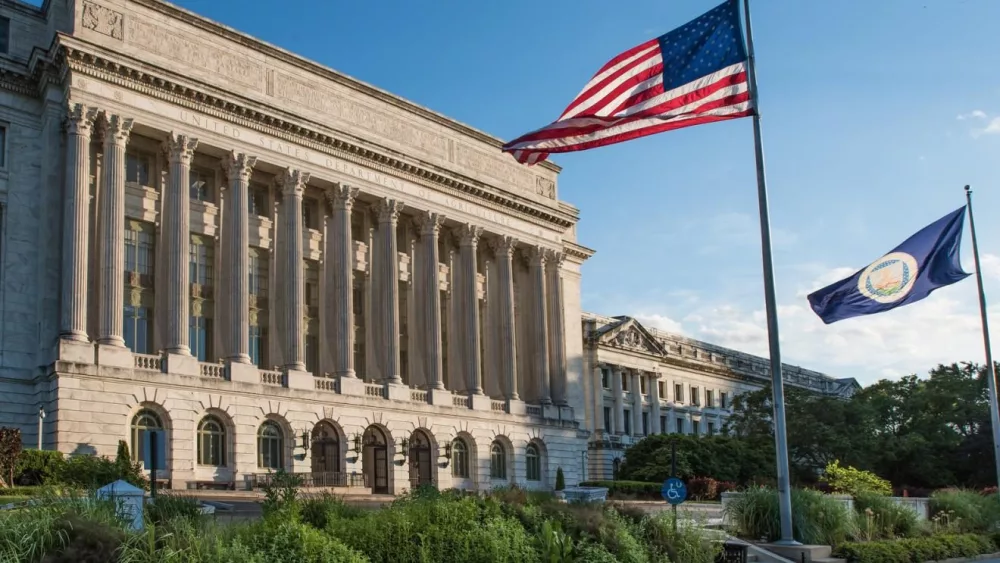

The U.S. Department of Agriculture (USDA) is preparing to reduce its presence in Washington, D.C., and relocate employees to three new regional hubs across the country, according to several sources familiar with the plans. While the exact locations for these hubs have yet to be finalized, senior USDA officials have informed staff that the changes will affect thousands of employees at the department’s headquarters. USDA is also expected to divest from one of its two buildings in Washington, D.C., as part of this reshaping effort, sources said.
Along with the relocation, the department is anticipating widespread layoffs, though the specific number of job cuts remains unclear. These layoffs are expected to occur in late April or early May. Some employees have been informed that the department plans to return to staffing levels seen in fiscal year 2019, potentially leading to a reduction of around 9,000 of USDA’s 98,000 employees. Others have been told that the department will make proportional cuts as part of a broader federal workforce reduction strategy developed by the administration.
The department declined to comment on the specifics but had previously outlined these types of changes during Secretary Brooke Rollins’ first day in office. At that time, the USDA emphasized its goal to optimize its workforce by eliminating positions deemed unnecessary, bringing more employees back to the office, and moving staff out of the National Capital Region to support rural communities.
Rollins reiterated this vision during a second round of voluntary “deferred resignations,” which allows employees to take paid leave through September before exiting government service. She stated that the department will be streamlining and reducing its workforce to improve efficiency, though she acknowledged that it was unclear which positions would remain or where they would be based after the restructuring.
The department plans to eliminate duplicate functions and reduce management layers. Relocation of staff will bring them closer to the farmers, ranchers, foresters, and consumers the USDA serves. As part of these changes, USDA has informed employees that remote work will no longer be allowed. Those who survive the upcoming reductions and are located more than 50 miles from the new hubs will be required to move.
USDA is also expected to consolidate its various mission areas and administrative functions into the hubs. Staff affected by these changes may be reassigned to new positions, but many employees will also be required to relocate as USDA plans to close several facilities, including some field offices. Affected employees will need to move to the new hubs, and USDA will not be renewing many of its current leases. Employees in consolidated functions may have the opportunity to apply for openings in the hubs.
At a recent meeting, an executive from the Agricultural Research Service confirmed that some employees would lose their jobs due to the cuts. He expressed frustration with the administration’s approach, criticizing the hub consolidation plan as not being grounded in real-world work dynamics. He suggested that the decisions were being made based on preconceived notions rather than facts.
The plans may have a disproportionate impact on certain USDA divisions. For instance, the Natural Resources Conservation Service, which saw a staffing boost after receiving funding through the Inflation Reduction Act, could face a significant workforce reduction. A return to 2019 staffing levels would result in a 23% cut, affecting roughly 23% of its staff.
Similarly, the U.S. Forest Service is planning to consolidate its nine regional offices into as few as three and may also close some of its five research stations. The consolidation of the 154 National Forests is expected to result in further cuts, including moving the Wildland Fire division to another government entity.
The deadline for employees to accept the deferred resignation offer is fast approaching, and many are hoping to learn more about the specifics of the new hubs soon. USDA is also expected to offer voluntary buyouts of up to $25,000 to employees in the coming days. However, some employees expressed frustration over having to make life-changing decisions without complete information, with one employee noting the uncertainty surrounding the future of their role.
This restructuring comes after the USDA’s controversial decision in 2019 to relocate the Economic Research Service and the National Institute of Food and Agriculture to Kansas City, Missouri, which resulted in the loss of more than half of their staff. Despite previous relocations, the agencies have since returned to Washington under the Biden administration while maintaining their Kansas City offices. It remains unclear if USDA will provide relocation assistance for those required to move this time.