A subset of crops likely to be affected by climate change, accounting for realistic adaptation
The global food system faces growing risks from climate change, even as farmers seek to adapt, according to a June 18 study in Nature.
In contrast to previous studies suggesting that warming could increase global food production, the researchers estimate that every additional degree Celsius of global warming on average will drag down the world’s ability to produce food by 120 calories per person per day, or 4.4% of current daily consumption.
“When global production falls, consumers are hurt because prices go up and it gets harder to access food and feed our families,” said Solomon Hsiang, professor of environmental social sciences at the Stanford Doerr School of Sustainability and a senior author of the study. “If the climate warms by 3 degrees, that’s basically like everyone on the planet giving up breakfast.” That’s a high cost for a world where more than 800 million people at times go a day or more without food because of inadequate access.
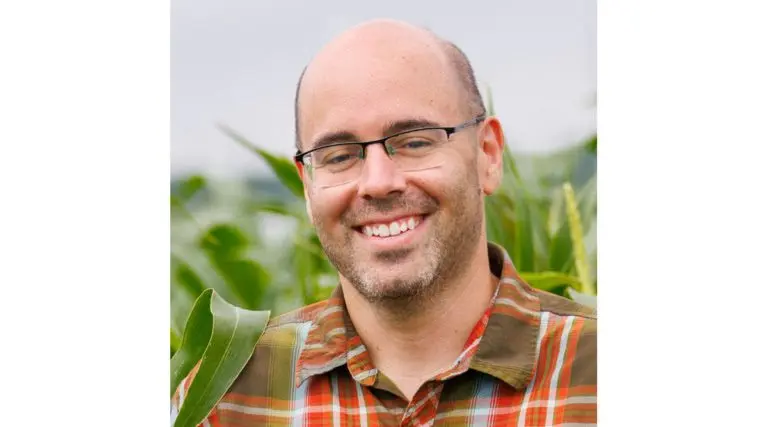
The projected losses for U.S. agriculture are especially steep. “Places in the Midwest that are really well suited for present day corn and soybean production just get hammered under a high warming future,” said lead study author Andrew Hultgren, an assistant professor of agricultural and consumer economics at the University of Illinois Urbana-Champaign. “You do start to wonder if the Corn Belt is going to be the Corn Belt in the future.”
Hsiang and Hultgren worked on the analysis with more than a dozen scholars over the past eight years as a project with Climate Impact Lab, a research consortium that Hsiang co-directs with University of Chicago economist Michael Greenstone, Rutgers University climate scientist Robert Kopp, and climate policy expert Trevor Houser of the Rhodium Group.
“This is basically like sending our agricultural profits overseas. We will be sending benefits to producers in Canada, Russia, China. Those are the winners, and we in the U.S. are the losers,” said Hsiang. “The longer we wait to reduce emissions, the more money we lose.”
Read more here: https://aces.illinois.edu/news/climate-change-cuts-global-crop-yields-even-when-farmers-adapt
SOURCE: University of Illinois