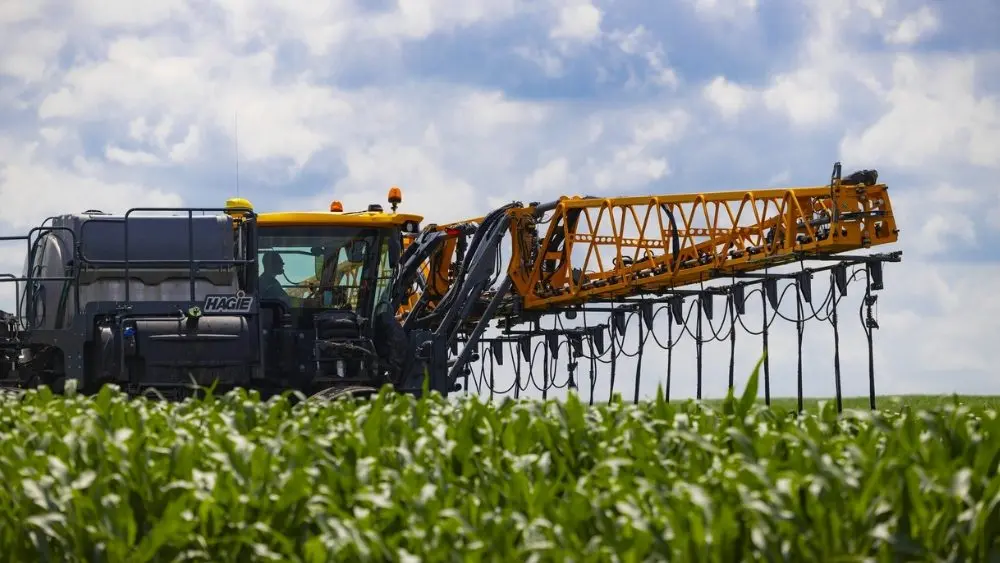
From drought-stressed fields at the start of the growing season to record-setting July rains in some areas, 2025 has kept growers guessing, especially when it comes to nitrogen availability for corn. Today’s modern hybrids continue nitrogen uptake into grain fill and delay moving stored nitrogen into kernels. With a wider window of nitrogen use, many growers consider making later nitrogen applications.
To learn how late-season nitrogen really affects yield, Kansas State University researchers tested how different nitrogen programs affected several Pioneer® brand hybrids under both irrigated and dryland conditions. The goal was to see how late-season nitrogen changes kernel numbers, kernel weight, grain fill timing and overall yield.
Researchers collected yield data from combines at harvest and assessed variables, such as kernel number and weight. Grain filling was closely tracked from R2 by sampling kernels every three to four days to monitor changes in dry weight and moisture.
Kernel Number and Weight
Kernel number was strongly correlated with final yield, followed by kernel weight. Nitrogen fertilization significantly increased both kernel number and kernel weight compared to the zero-N treatment. While kernel number varied among hybrids, kernel weight did not, highlighting that hybrid yield differences were driven mostly by how many kernels set around silking.
Grain Filling Dynamics
Research found that late-season nitrogen applications extended the grain fill period and increased the rate of dry matter accumulation compared to no late-applied nitrogen. The grain fill period was even longer for newer hybrids compared to older hybrids. These benefits were mostly due to a longer linear grain filling phase, rather than changes in the lag phase when kernel cells divide.
Interestingly, the timing of the final N application, whether at silking or two weeks later, did not significantly affect grain filling duration or rate. The effects of nitrogen on grain fill rate differed slightly among hybrids, suggesting that genetics play a role in how reproductive nitrogen uptake influences final kernel weight.
All treatments reached physiological maturity at a similar kernel moisture content (around 35%), indicating that while nitrogen influenced grain fill dynamics, it did not alter the moisture threshold for black layer formation.
Key Considerations
“Keep an eye on nutrient deficiencies,” said Pioneer Agronomist Matthew Vandehaar. “You might be sitting in front of a nice crop now, but we still have a long way to go through grain fill. If you see yellow leaves showing nitrogen deficiency moving up toward the ear leaf, you may decide not to apply more nitrogen this season. That is understandable if you don’t want to invest more money at that point.”
Vandehaar does recommend taking note of your nitrogen plan, soil types, how widespread the issue is and whether you might adjust your program next year.
“Maybe shift away from being so fall-heavy and look at in-season applications where feasible,” he said. “Just be aware of conditions, like wet fields, that could limit access [to nitrogen]. Evaluate your nutrient plan now if you’re seeing firing or other deficiencies.”
SOURCE: Pioneer News Release