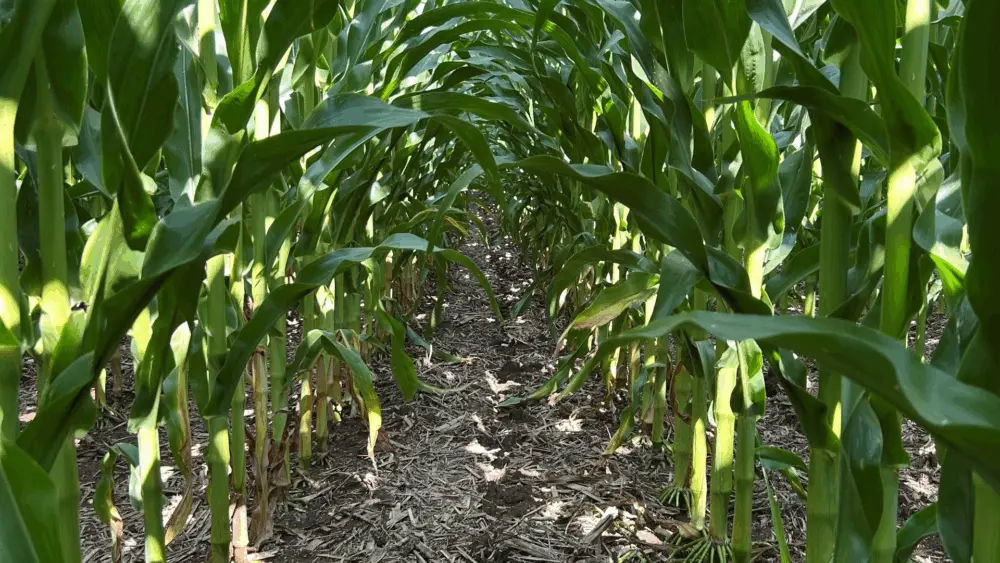
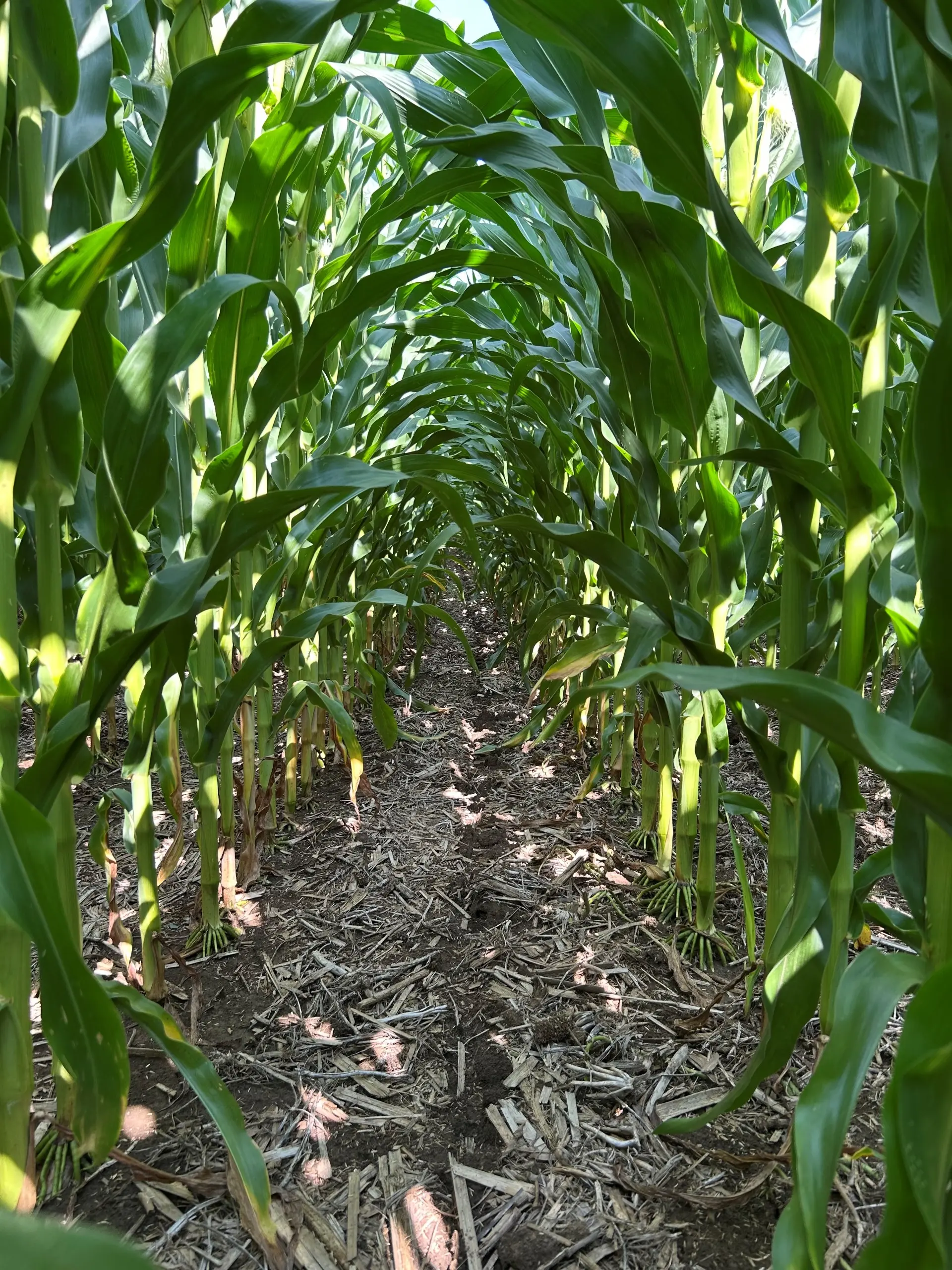
Planting corn seed with strong plant health, such as LG60C05 (pictured), is especially important on no-till acres where disease can present even more of a challenge.
WESTFIELD, Ind. (Aug. 20, 2025) — Early-season wet conditions signal growers need to closely monitor corn stalk health as harvest approaches. LG Seeds Agronomist Kyle Malcolm expects some standability issues in the eastern Corn Belt this season after some growers dealt with a cool and wet planting season.
The toll of downed corn goes beyond yield. “Even if the grower is able to pick it all up without losing yield or grain quality, the down corn will cost them time and fuel, plus it’s a mental drain at a time when fatigue is already common,” Malcolm explains.
One of the best defenses against the headaches and cost of downed corn is simply awareness. Keeping tabs on stalk health enables growers to adjust harvest plans so they can protect corn yield, their sanity and their bottom line.
Many factors can lead to down corn — some of which growers can control and others that are out of their hands. Malcolm shares some tips that can help growers avoid standability issues this fall.
What impacts corn stalk integrity
Weather is a major player. Planting into cool, wet conditions can set the stage for crown rot that can degrade corn yields and stalk health by shutting the plant down early.
Hitting a stretch of dry, stressful weather after pollination can also jeopardize stands. If the corn plant is unable to pull up nutrients from the roots, it will instead start pulling nutrients out of the root system and corn stalk to fill grain, Malcolm explains. That weakens the stalk and root system, leaving the corn plant more prone to collapsing as the growing season wanes.
Disease is another contributor to stalk quality issues. “Corn diseases like tar spot, gray leaf spot and northern corn leaf blight can have impacts on stalk quality,” Malcolm says. “They can shut the plant down prematurely as it tries to fight off disease.”
Farmers should also be aware that corn rootworm can cause root lodging and stand issues, Malcolm continues. Growers with heavy pressure should keep that in mind as they plan harvest order.
How to protect corn stands
Growers concerned about crown rot or other threats to corn standability have in-season options to help crops finish strong. “No. 1 is fungicide,” Malcolm says. “An application can help with overall plant health and stalk integrity.”
A corn field may also benefit from a late-season nitrogen pass, especially if it’s starting to pull nutrients out of the plant, he says. That late boost of corn fertility can help the stalk maintain integrity and continue standing until combines roll. Further, documenting issues in problem fields can aid growers in identifying nutrient deficiencies and guide targeted soil testing where needed in subsequent years.
Farmers can also defend against corn stand issues with smart seed selection. “Disease pressure continues to be a concern year after year, so picking corn seed that maintains plant health all season long, has strong roots and sturdy stalks should be a major focus,” Malcolm says.
For corn-on-corn and no-till acres, it’s even more critical that growers choose products with impressive plant health, strong roots and robust emergence, helping them to stand strong from start to finish. Disease is typically an even greater threat on these acres.
How to scout corn fields for standability issues
Scouting should be done throughout the season, but Malcolm says field checks specifically for standability issues should begin in late August or early September. Growers need to take stock of any issues in their fields and adjust harvest plans accordingly.
To check for crown and stalk rots, split the corn stalk in half and observe the cross section. “A healthy crown and stalk will look white and almost like Styrofoam on the inside,” Malcolm says. “But if it’s brown and soft, know that you likely have crown and/or stalk rot that will likely worsen as the season progresses.”
Growers can also use either the push or pinch test to check stalk integrity. “For the push test, if you push it to the next row and it springs right back, you probably don’t have an issue,” Malcolm says. “But if 5% or more of the stalks you push break, you should consider making those fields a priority and harvest them early.”
For a pinch test, Malcolm recommends using your fingers to squeeze the stalk of corn just above the crown. A hard stalk signals solid stalk integrity. But if the stalk can be smashed with your fingers, it signals the corn stalk is beginning to deteriorate.
“Take your agronomist with you into the field if you have questions,” Malcolm adds.
How to prioritize plant health when choosing corn seed
“Plant health is a big priority at LG Seeds,” Malcolm says. “We pride ourselves in picking products that are going to stand all season long, that will have great plant health and strong agronomics for the wide variety of challenges growers face across their acres.”
Choosing corn seed with strong agronomics lays a dependable foundation for your corn crop. For support with seed selection, scouting or management choices to get your crop to the finish line in good shape, reach out to your local LG Seeds agronomist or district sales manager.