At 67, Nick Nemec says for as long as he can remember, he wanted to be a farmer.
“When I was little, my aunt was getting married and she asked me to be the ring bearer. I refused the job because I was not going to be a ring bearer, I was going to be a farmer,” Nick shared.
Growing up on his family’s Hyde County farm, Nick got plenty of practice farming. “Even today, I can go out to any of my dad’s fields and tell you where the bad rocks are and which fence posts I helped replace. I am intimately connected with my family’s land.”
The military helped the fifth-generation farmer achieve his dream career.
After high school, Nick attended West Point and then the University of South Dakota. He graduated with a degree in mathematics and served as an officer in the Marine Corps for three years.
“While I was in the Marine Corps, I saved as much money as I could. When I got out, I took what I’d saved and went to the Ft. Pierre Sale Barn and bought 24 bred heifers,” Nick said. “This is how I got my foot in the door.”
A few years later, in 1988, Nick and his wife, Mary Jo (Zilverberg), bought their first 800 acres of farmground. It was a Farmers Home Administration (FHA) foreclosure property.
“FHA wanted to get the farmland back into the hands of young farmers,” Nick said, explaining that instead of putting the land up for auction, FHA prepared to sell it for the appraised price. Any farmers interested in purchasing the land needed to fill out an application and a committee would select the applicant they would sell the land to.
“It turned out I was the ideal candidate,” Nick said. “The application asked: my age, was I married, did I have kids and are you a veteran of the U.S. Military. I was able to check all the boxes.”
Mary Jo was eager to raise their children on the farm because it’s where she grew up. “Kids have room to roam on the farm and learn many life skills,” Mary Jo said.
She explained that becoming a mom made her value her rural roots. “After nursing school, I moved to Minneapolis. I had gotten married, and divorced, so I was raising Suzanne on my own. One day the school bus left without Suzanne and she ended up standing in below zero weather, on a street corner in Minneapolis, for an hour. She was only 5. That’s when I decided it was time to move home.”
Like Nick, home for Mary Jo is Hyde County. In fact, she and Nick grew up just 10 miles apart. They were members of the same 4-H club and attended neighboring country schools – Nick attended Loomis School and Mary Jo attended Valley School. They are both graduates of Highmore High School.
“Our schools were close enough they would host holiday parties together. One year we were even Valentine’s Day King and Queen, so we passed out the Valentines together,” Mary Jo recalled. They reconnected after many years when Mary Jo happened to run into Nick at a neighbor’s farm sale. “Nick proposed to me on our first date,” Mary Jo said.
Shortly after they married in 1986, Mary Jo asked Nick if they could join Farmers Union and a lifetime membership was purchased.
“Growing up my parents were active in Farmers Union and I was involved in Farmers Union youth camps. I served as a member of the Junior Advisory Council 1974-1975 and I got to travel to D.C. with Farmers Union,” Mary Jo said. “Being a farm girl from a small, rural school, Farmers Union expanded my horizons. I wanted our kids to have the same opportunities.”
Their daughters, Ana, Erin and Brigette, were actively involved in Farmers Union youth programming. All three were elected to the SDFU Junior Advisory Council and achieved their Torchbearer Award, the highest youth achievement in Farmers Union. Erin was employed for two years as summer staff to the education program. Mary Jo has also volunteered, serving as a camp coordinator, and is a past District VII state board director.
Mary Jo was able to stay home on the farm until her daughters were all in school. In 2000 she returned to her nursing career and began taking classes to elevate her degree and career opportunities. In 2012, she received her master’s degree as a family nurse practitioner.
“Our health insurance premiums were out of this world,” Mary Jo explained. “I knew I needed to get back into a career where I could get our family health insurance.”
Supporting the next generation
Today, her daughters, Suzanne and Erin, also have careers off the farm for similar reasons. Suzanne works as a USPS clerk and Erin as a registered nurse for Avera.
“Health insurance is one reason, and the other reason is as a farmer, just getting established, it is difficult to have enough steady income to cover household expenses,” explained Erin’s husband, Dan Powell.
Three years ago, Erin asked her dad if Dan could join him and her brother-in-law, Derek McCloud, on the farm. Nick said “yes.”
“We want to pass the farm on to the next generation, and our sons-in-law are the next generation,” Nick said.
He explained that although all three men farm/ranch on their own, Nick and Mary Jo have been able to help them get started by sharing equipment, leasing livestock on shares, leasing crop acres, and helping them with housing in the same manner his own father did.
Determined to create an environment where the next generation will thrive, Nick made a conscious decision to take a step back and hand over control of certain aspects of the farm when his sons-in-law asked for his help to get started.
“I had seen so many farms where the old man could not let go and they needed to retain complete control,” Nick shared. “Guys in their 60s, who had been on the farm their entire life would have to do whatever the 80-year-old told them to do. I did not want to be that guy.”
Ten years have passed since Nick asked Derek if he would like to farm with him.
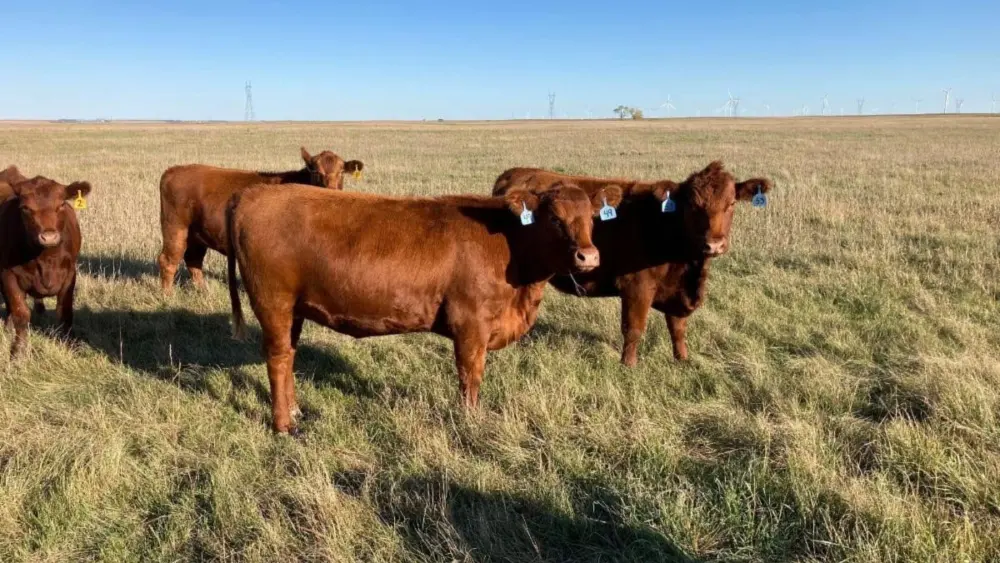
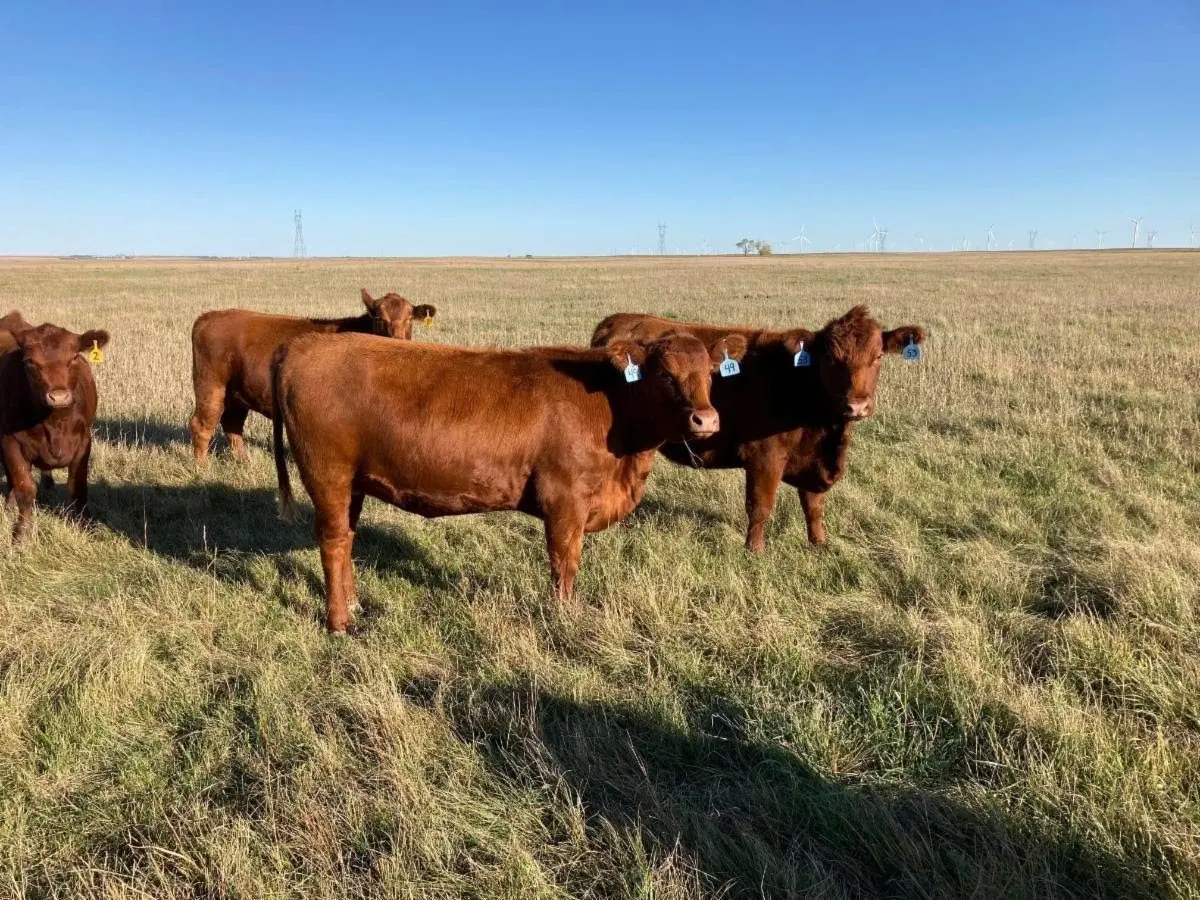
“I made a deal with Derek. I would rent him the cows on shares until he was able to buy the herd from us. I would rent pastures to him and he would have complete management control of the cow herd,” Nick explained. “I would be happy to answer questions, but if he did not ask, I would shut up.”
Derek was 39 when he talked with Nick, but ranching full time had been on Derek’s mind since he was 16. In fact, he loved ranching so much that he moved from Colman to Highmore so that he could live and work on his Grandpa Speed’s farm.
When high school sweethearts Derek and Suzanne married, she wanted to experience life outside of Highmore. So, Derek’s first career was as a maintenance supervisor for Pipestone Systems, a hog confinement system management organization and the couple resided in Madison.
When their youngest child was on the way, they decided they wanted to live closer to grandparents.
“Without Nick and Mary Jo’s help, I would not be farming,” Derek said.
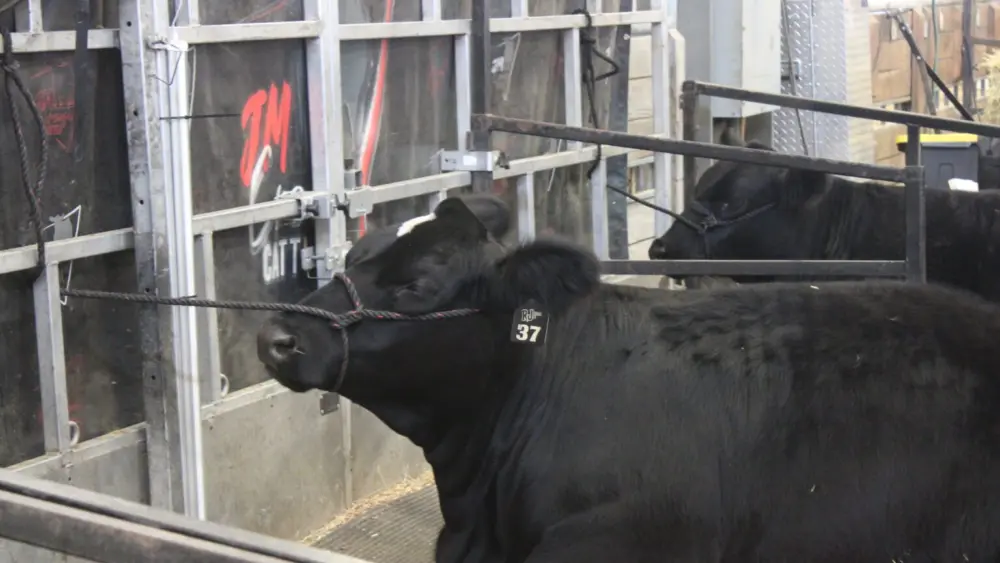
Today, Derek and Suzanne have expanded their cow/calf operation and now own it as well as purchasing their own acres. As he looks ahead, Derek said he is focused on improving his herd genetics, specifically he is working to increase feed efficiency. “I have bought most of my cattle from Montana or Wyoming, and their feed efficiency is better than other cows. I think it is because they have so much less grass and the cows had to adapt.”
Like Derek, Dan’s first career was off the farm. He worked in grain merchandising for CHS Cooperative. He enjoyed working with farmers. But each promotion took him further and further away from the members.
“I was in charge of all grain accounting for South Dakota, North Dakota and parts of Minnesota, so I spent my days leading conference calls, and then I would go home and spend four to five hours working,” Dan explained.
As a farmer, Dan’s work days did not get shorter, but he values the flexibility that comes with being his own boss. He also appreciates the fact that he has Nick and Derek close by if he has questions.
“I grew up around farming, because my dad worked for cooperatives, but I did not grow up on a farm, so I do look to them for advice,” Dan explained.
Full-time grandma
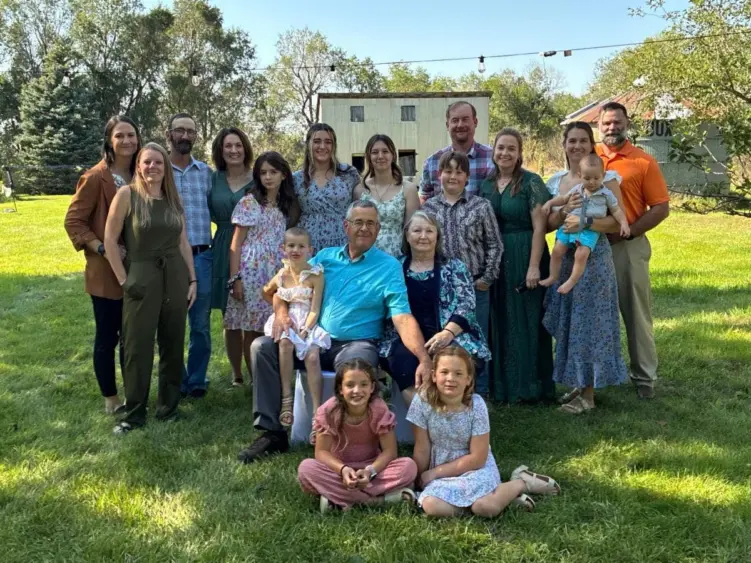
Mary Jo retired from her nursing career in 2024 and said today she enjoys being a full-time grandma to their eight grandchildren: Mya, Avery, Kate, Corbin, Adalyn, Coralie, Kimber and McCabe.
“I am here if they are sick and need to stay home from school. I am here if they need a ride to swim lessons or to be picked up from the school bus,” Mary Jo said. “And occasionally I am still asked to do a parts run or help move machinery.”
Even though he is often busy with planting or harvest, Nick enjoys having two sets of grandchildren close by. “They live close enough that they just stop in, they don’t have to knock or ring the doorbell,” Nick explained. Grandson, Corbin, is an enthusiastic assistant especially when it comes to any task having to do with driving a tractor.
Because they both have more free time, they are able to travel and visit their off-farm daughters. Ana, who lives in Rapid City, is a communicable disease intervention specialist for the S.D. Department of Health. Brigette, a special education teacher, and her husband, Justin Downes, the superintendent for the Milbank School District, reside near Milbank with their children, Coralie, Kimber and McCabe.
Throughout the past year, Mary Jo spent extra time with daughter Brigette because 6-year-old Kimber was undergoing chemotherapy and radiation treatments for rhabdomyosarcoma.
After a tough year, the family is grateful Kimber is now cancer free.
“People who have been given to, need to give back.” Mary Jo Nemec
While Nick and Mary Jo were building their farm and family together, they also made time to give back to their community and church.
The families are active cooperative members. “Nearly every service we use in our homes and on our farm is from a cooperative,” explained Nick, who serves on the board of the Dakota Energy Cooperative. “Cooperatives have been an instrumental part in building and modernizing our community.”
The telephone cooperative, Venture Communications, also provides them with internet and cable. Their electricity is from Dakota Energy Cooperative. They bank with Farm Credit Services and get their water through Mid Dakota Rural Water Systems.
And each year, Nick and Mary Jo host a bipartisan pheasant hunt and chili fundraiser. The event started when Nick represented six rural counties in the South Dakota Legislature: Hyde, Potter, Faulk, Edmunds, Walworth and Campbell. “Kevin Woster and I started the hunt to encourage members of opposite political parties to work together. We wanted to show Democrats that Republicans did not have devil’s horns and show Republicans that Democrats did not have devil’s horns.”
After the hunt, a hat is passed while the participants enjoy Mary Jo’s famous chili. The dollars raised go to help a local cause such as Knights of Columbus Coats for Kids or the local food bank.
Mary Jo shared that one year a larger fundraiser helped cover expenses related to building a handicap accessible addition to the family home of a disabled child.
“People who have been given to, need to give back,” Mary Jo said.