MORTON, Ill. (Dec. 2, 2025) — When harvest is over, farmers put away their equipment and begin planning for the next growing season. Morton Buildings recommends that farmers also inspect their buildings to identify any necessary repairs or renovations that can help prevent problems and improve efficiency in 2026.
Jeremiah Fairbanks, Morton general manager of repairs and renovations, says it’s important to catch even small issues sooner rather than later. “The longer a problem is left uncorrected, the higher the risk of it becoming a more significant repair,” he cautions.
Fairbanks says a building checkup should include:
Water damage – Enter a building, close the door and look for light coming in. “If you see light due to a storm or other damage, water is going to get in,” he says. “Looking up and seeing a nail hole could be as simple as patching it with silicone. However, if ignored, water could leak through and damage your ceiling and tractor electronics.”
Wear and tear – If dents and dings are found in the middle of a wall panel, they probably won’t lead to a serious problem. “However, if the damage is more than a quarter inch wide at a rib location, where two sheets of steel come together, that can result in leaks,” Fairbanks says. “To protect the things inside, fix the things outside first.”
Roofs – Don’t climb up on rooftops, but instead stand back far enough to inspect the ridge line to make sure it is horizontal. “Sometimes a ridge cap pops up on a corner, and that needs to be fixed to keep the elements out,” he notes.
Splashboard – Walk around the building to inspect the splashboard, a protective baseboard around a building exterior, especially for older structures. Replacement is one option, since a rotted splashboard impacts the structural integrity of the building. Alternatively, Fairbanks recommends considering replacing the splashboard with a new wainscot.
“A decorative wainscot is a great opportunity because it adds aesthetic appeal and costs less than replacing an entire steel wall panel, which is required when removing the splashboard,” he notes. “A wainscot requires removing only up to the bottom 3 feet of the existing steel.”
Sliding doors – Check sliding doors for gaps or sagging panels that can reduce energy efficiency. Also inspect for faulty door mechanisms, such as seized or misaligned rollers, that can cause a door to stick or come loose and fall from its tracks, risking injury to people or animals.
Repair or renovate?
Often, building needs go beyond repairs. A renovation program may be a better long-term option for improving efficiency and meeting the farm’s growth needs.
“Determine if your farm buildings still meet the needs of your operation,” he says. “For example, if your shop is full and more or larger equipment is coming, you might think about a building extension. Or, if you’re doing a lot of maintenance in a cold storage facility and there’s just a portable heater in the corner, consider adding insulation and turning it into a farm shop.”
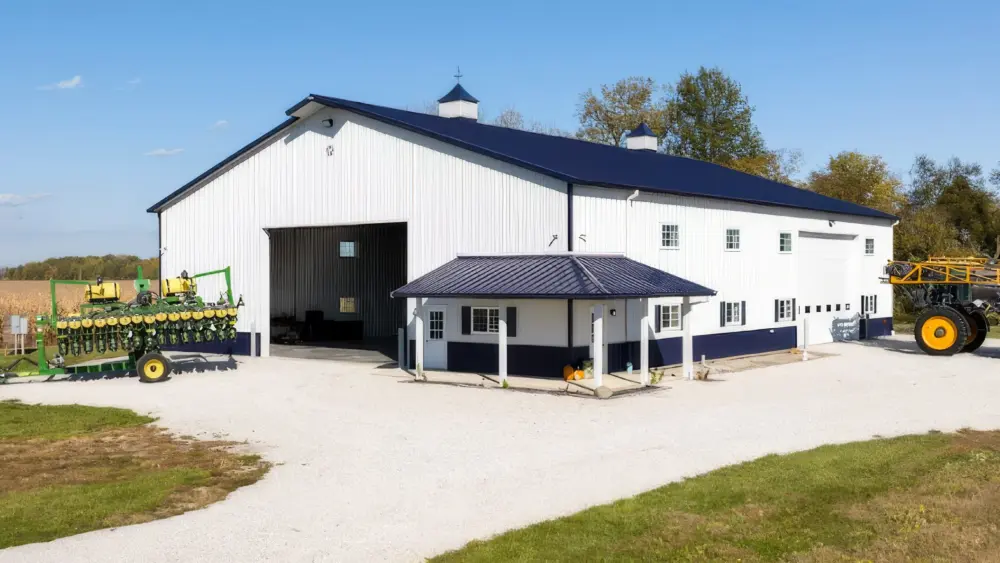
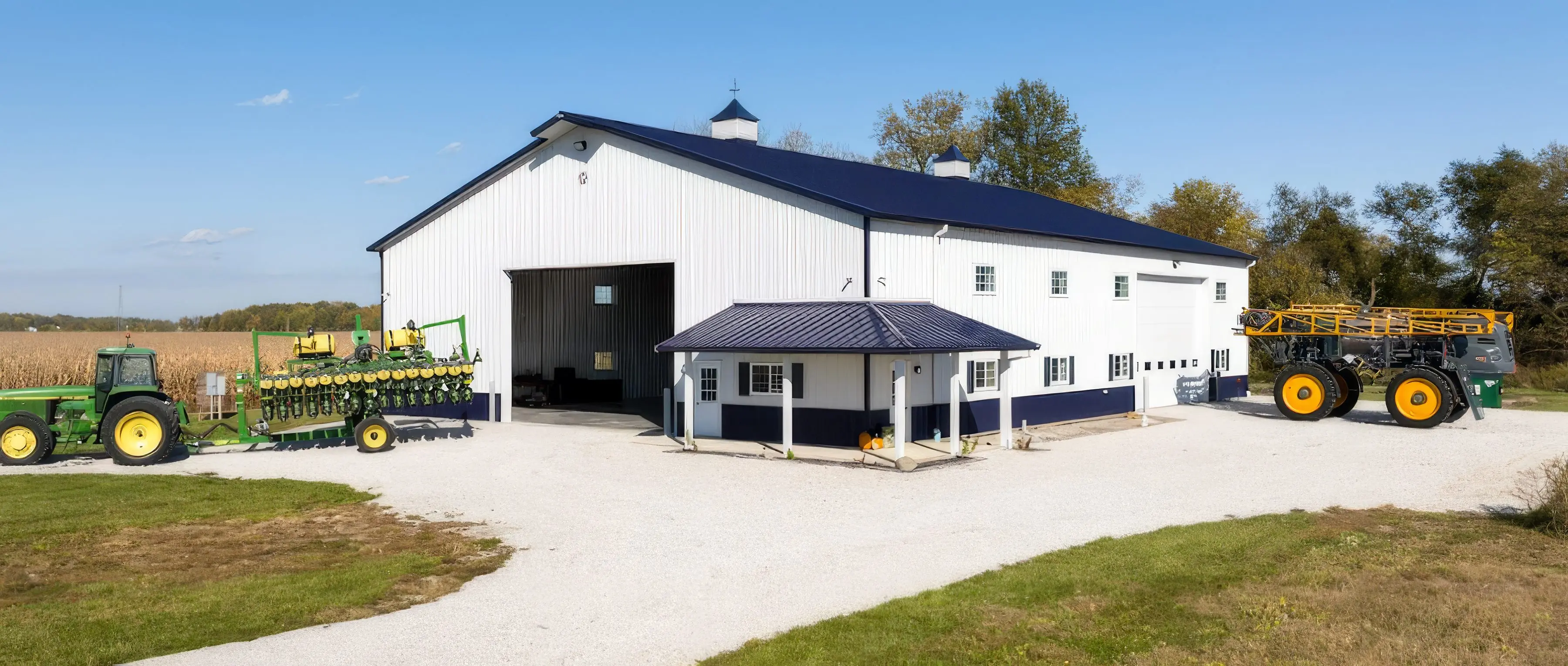
Renovation projects can also enhance aesthetic appeal, such as a porch, rooftop cupolas or an eyebrow over the walk door.
For farms with taller equipment, Fairbanks says switching from an overhead to a sliding door provides more clearance. On the other hand, farmers who find manually opening and closing overhead doors inconvenient may want to switch to a powered overhead door.
For more information about repairs and renovations for post-frame farm buildings or to schedule a free building inspection, visit mortonbuildings.com/