“We built this because we’ve seen firsthand how risky this work can be. My own father was a rail loader, and the protective technology has only marginally improved since then,” said Boehm. (Courtesy Photo)
MORRIS, Ill. — A Saskatoon-based agricultural robotics company is expanding beyond Canada after signing its first US contracts with three grain elevator operators in the Midwest and Northern Plains.
RAYHAWK, an AgTech startup founded in Saskatoon, Canada, has secured agreements with FS Grain in Illinois, MarKit County Grain in Minnesota, and Dakota Midland Grain in North Dakota. Each company will deploy RAYHAWK’s automated railcar lid-opening and closing system, with installations scheduled for early 2026.
The deals mark the company’s first commercial expansion into the United States and reflect growing interest among grain handlers in automation that addresses worker safety and labor availability.
Addressing a Long-Standing Safety Challenge
Railcar lid handling is one of the most physically demanding and hazardous tasks at grain elevators. In many facilities, workers must climb railcars and manually open and close lids, often in extreme weather conditions.
Despite decades of discussion around automation, the task remains largely manual across North America. According to RAYHAWK, this contributes to workplace injuries, high turnover, and challenges in attracting and retaining staff, particularly in rural communities with limited labor pools.
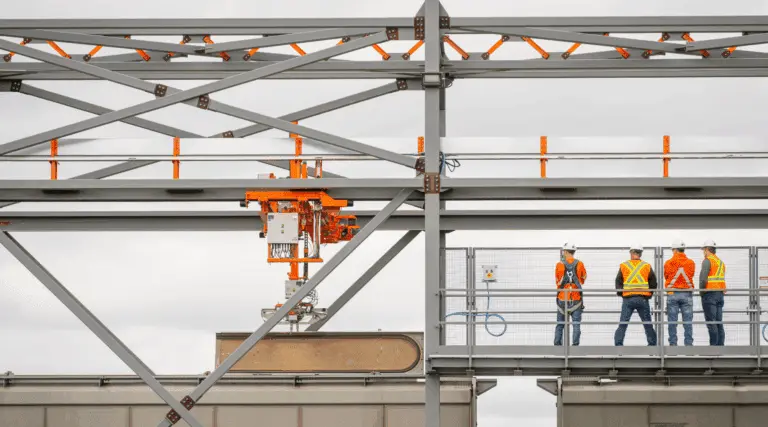
The company’s system automates the lid-handling process, allowing employees to remain on the ground and inside control areas during train loading operations.
Rather than replacing workers, the goal is to allow elevators to redeploy labor to other operational needs while improving overall safety.
“The grain industry isn’t struggling because there are too many workers,” said Tom Boehm, CEO of RAYHAWK. “It’s struggling because there aren’t enough. Automation makes the work safer and more meaningful, allowing precious staff to have extra capacity to engage in other critical tasks of maintaining and operating the facility.”
Us Grain Companies Invest in Railcar Lid Automation
For FS Grain, the decision to adopt the system aligns with broader infrastructure upgrades and the desire for the company to continue forging and renewing their innovative reputation.
“The timing of this RAYHAWK investment is perfect. It lines up with our construction and expanding this site from a 25-car loader to a full shuttle-unit loader. As I mentioned, we’re not trying to replace jobs with automation, but we are trying to make them safer and more efficient. This is a cutting-edge tool… and we’re no strangers to implementing new, innovative features within the agricultural sector. We pride ourselves on being that leader,” said Collin Graves, CEO and General Manager.
In Minnesota, MarKit County Grain cited labor competition as a key driver behind the investment. The team, led by Will Kusler, understands that attracting labor means investing in the infrastructure that will excite the staff of tomorrow.
“We’re in small communities, as most grain companies are. We don’t have an unlimited labor pool, and as farms get bigger and bigger, they’re competing in that same labor pool. For us to find qualified and reliable help, it’s always a challenge. We felt that investing in a system like this would help us attract better and more qualified employees, and retain those we were able to hire and hang onto,” said Kusler, General Manager.
Dakota Midland Grain, which operates multiple facilities in North Dakota, emphasized the operational peace of mind automation can provide. Safety is the highest priority for Dakota Midland Grain, and the re-deployment of staff to other areas of the elevator is something General Manager Kayla Burkhart and her team all look forward to.
“We have multiple facilities, and when we have trains loading, no matter the hour, I’m not asleep. I’m constantly concerned about what’s going on, even if I’m not on site. It’s going to be a huge relief to know everyone is safe and inside. And I think we’re going to see employees really enjoy not having to [handle railcar lids] anymore,” said Burkhart.
Prairie-Built Technology Finds Broader Demand
RAYHAWK’s expansion comes as grain handlers across North America face increasing pressure to improve safety performance while managing labor shortages. The company says interest from US-based operators grew quickly after early deployments in Canada demonstrated improvements in safety and consistency.
The technology was developed in Saskatchewan, where rail-dependent grain movement and harsh operating conditions are all-too-familiar challenges.
“We built this because we’ve seen firsthand how risky this work can be. My own father was a rail loader, and the protective technology has only marginally improved since then,” said Boehm. “Seeing US operators adopt RAYHAWK so eagerly confirms that these challenges aren’t unique to one region, and these problems need a solution right now.”
RAYHAWK expects additional US installations in 2026 and is continuing to explore partnerships across Western Canada.