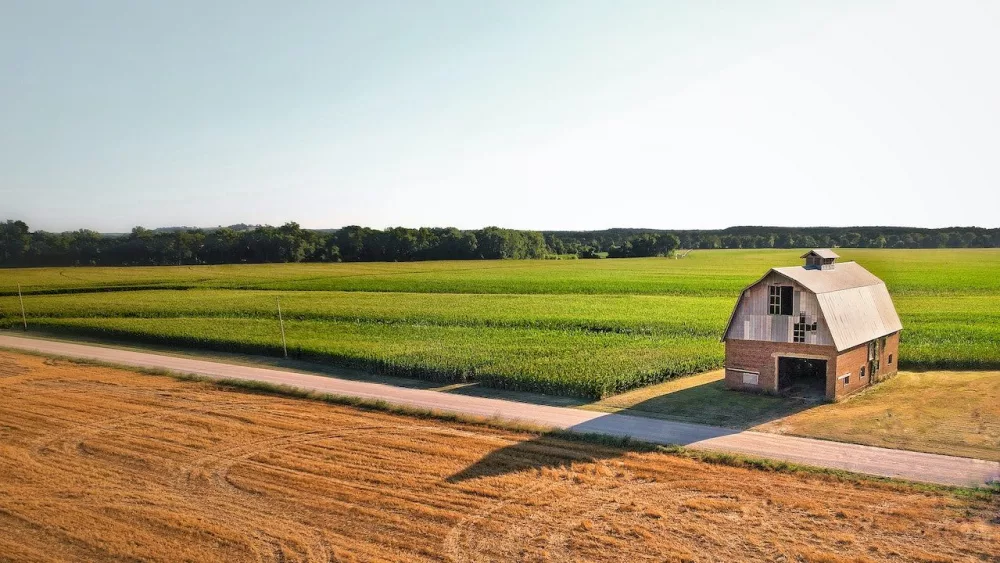
Photo courtesy of Pexels; Taylor Hunt- Flint Hills Photography
MANHATTAN, Kan. — Kansas agricultural land values appear to be stabilizing as producers enter 2026, according to Kansas State University Extension experts.
After several years of rapid appreciation, the land market is showing more measured movement, influenced by profitability pressures, interest rates and the increasingly diverse ways land generates income.
K-State Extension land and crop market specialist Megan Hughes emphasized that land values are driven by more than just crop production potential.
“Things like hunting access or energy development can absolutely increase land value,” Hughes said. “Those non-agricultural uses matter, and they’re part of what keeps demand strong in certain areas.”
Kansas producers are often highly diversified, operating across crops, livestock and alternative enterprises — a reality that directly affects land markets. Hughes noted that decisions about land cannot be made in isolation from the broader farm business.
“Because we tend to be so diversified, producers really have to consider all enterprises when making decisions,” she said. “Low profitability in the crop sector will bleed over into everything else.”
While land values remain relatively steady, economic pressures are building. Kansas net farm incomes in 2026 are projected to remain steady or decline slightly compared to 2025, adding another layer of caution for producers evaluating long-term investments.
Hughes stressed that interest rates continue to be a major driver in land market behavior.
“There are a lot of factors that go into land values, including interest rates, and it’s something we’ll be keeping a close eye on,” she said.
She also reminded producers that the Kansas Land Values publication provides benchmark averages rather than precise pricing.
“Kansas land values are averages — they’re not exact numbers,” Hughes said. “Every parcel is different, and location, quality and use still matter.”
Even for producers with no plans to enter the land market, shifts in land values can have significant ripple effects. Hughes explained that real estate makes up a substantial share of farm wealth nationwide.
“Real estate accounts for about 80% of farm assets in the United States,” she said. “Any change in land values can affect a farm’s financial position moving forward, even if you’re not buying or selling land.”
As economic conditions evolve, Kansas producers are encouraged to use land value data as a planning tool rather than a prediction, keeping a close eye on trends that influence both balance sheets and long-term resilience.
More information also is available in a new publication from K-State Extension, the 2025 Kansas Land Values Book, which can be accessed online.