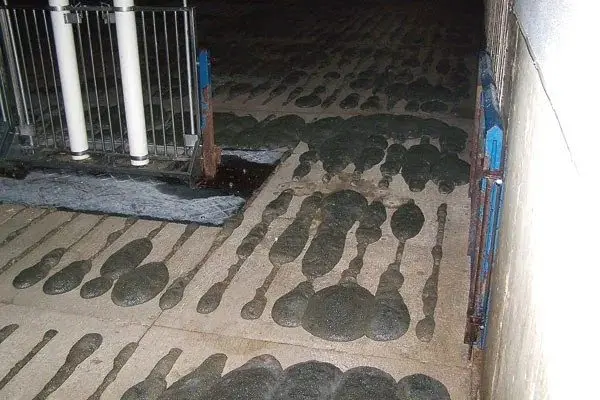
Manure foam in a swine barn. Photo courtesy of Dr. Larry Jacobson, University of Minnesota
AMES, Iowa – Manure management is a crucial aspect of swine production. Being proactive and taking steps to address manure foaming is critical for the safety of livestock and farm workers.
“Manure foaming has always been a concern but has become more prevalent this year,” said Ashley Englin, swine extension specialist at Iowa State University. “Typical preventative measures are not working, leading to increased risk of barn fires and safety concerns.”
Englin recently wrote an article highlighting key safety practices and methods for reducing foam. “Pit Foaming in Swine Barns: Fire Risk and Practical Solutions” is based on research from the Iowa Manure Management Action Group at Iowa State University and can be accessed at ipic.iastate.edu.
Daniel Andersen, associate professor and extension specialist at Iowa State University, focuses his research on manure management and water quality. Andersen hosts a podcast, “Talkin’ Crap,” which features interviews with experts in manure science, technology, and management practices.
“Empty barns are more dangerous. We often lower ventilation, and without animals’ defecation and urine falling into the pit, bubbles that would normally break start to accumulate,” said Andersen. “So even if you normally don’t have pit foaming, you can get some when barns are empty.”
The following podcast episodes are free to listeners and provide specific information on manure foam management and safety: Foaming at the Pit: Causes, Consequences, and What We’ve Learned and Harvest Hazards: Manure Management and Farm Safety.
For additional guidance, producers can contact their regional swine extension specialist.