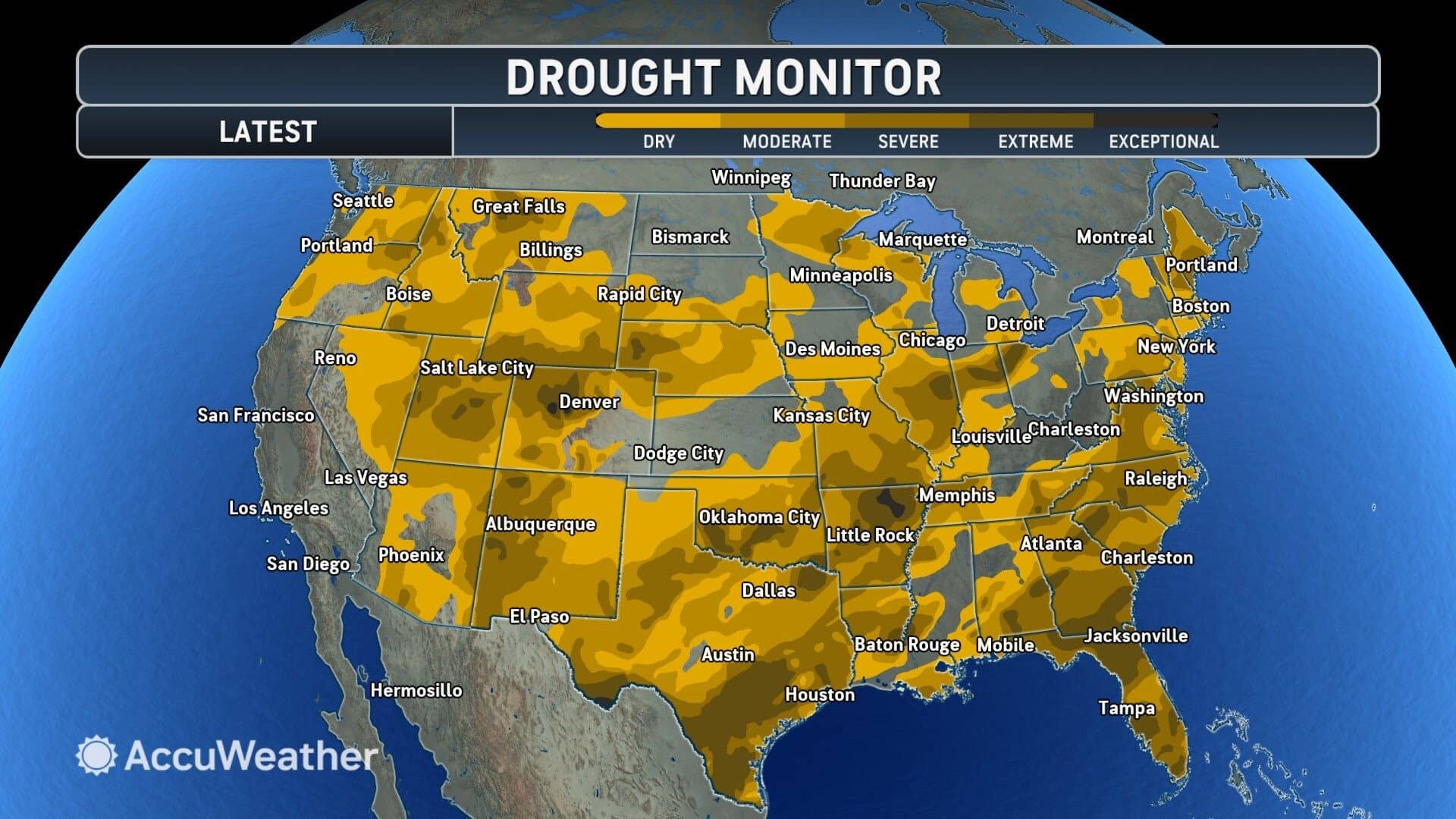
AccuWeather® Global Weather Center – Feb. 18, 2026 – Expanding drought conditions across more than 45 percent of the contiguous United States are rapidly increasing the risk of wildfires as spring approaches, according to AccuWeather long-range experts.
“There is no true wildfire season in America anymore. If vegetation dries out and winds are strong, fires can ignite and spread rapidly regardless of the month on the calendar,” AccuWeather Meteorologist Brandon Buckingham said. “Some of the most destructive wildfires can happen well outside of the traditional fire season in the summer and fall months, as we tragically witnessed in Los Angeles County last January.”
AccuWeather climate experts say shifting precipitation trends are compounding the risks. Average annual rainfall across the contiguous United States has declined 2.7 percent since 1995, or 0.9 percent per decade on average, increasing the risk of expanding drought and wildfires, according to a groundbreaking AccuWeather climate study released in January.
Wildfires scorched more than 5 million acres nationwide last year, and more than 40 percent of those fires occurred east of the Mississippi River.
Western & Central US
Dry conditions spreading
Areas of extreme and exceptional drought have been reported in parts of New Mexico, Colorado, Utah, Nebraska, Wyoming, and Montana. Temperatures trending above historical averages are accelerating the drying of grasses and brush that can fuel fast-moving fires.
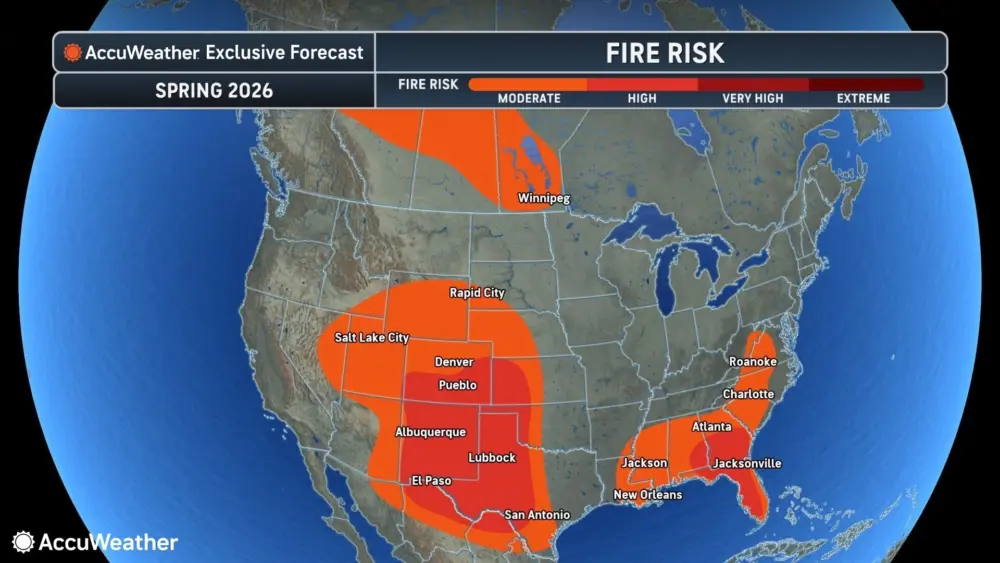
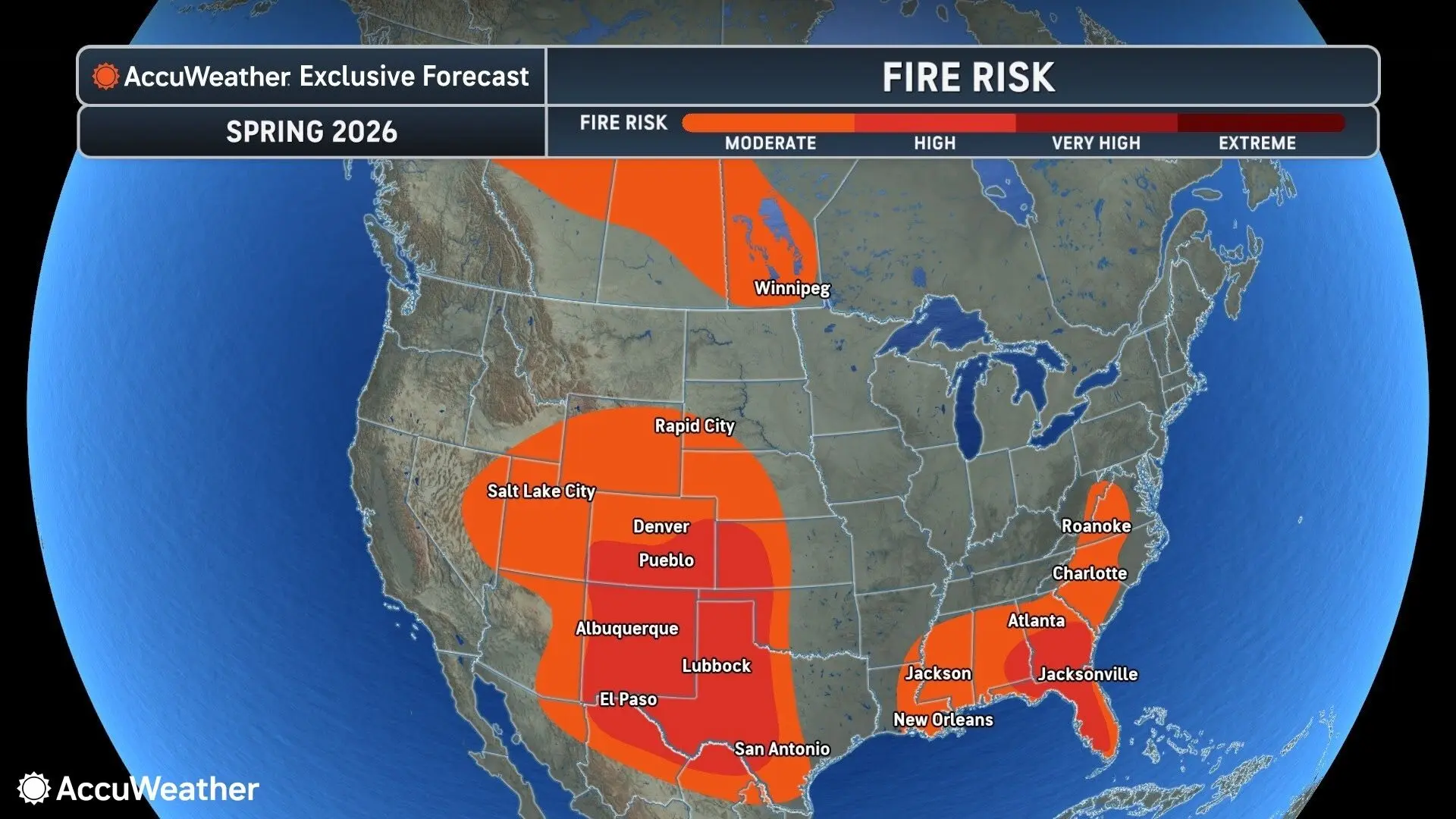
“Across the nation this spring, the Four Corners region and the adjacent Front Range and High Plains are expected to feature the highest risk for wildfire activity,” Buckingham warned.
Snowfall well below historical averages across parts of Montana, Idaho, and Wyoming is increasing early wildfire concerns. While March storms may briefly limit activity, drier conditions in April and May could allow fuels to dry earlier than normal.
In California, late-winter storms may provide temporary relief, but fire concerns are expected to increase by May as seasonal drying accelerates. Higher humidity along the coast should keep the threat lower than inland areas, though offshore wind events could quickly elevate the risk.
“All the rain and mountain snow during the wet season means more vegetation growth this spring. It may look lush and green in the coming weeks, but most of that brush and vegetation will dry out later this year,” Buckingham warned. “An abundance of dry vegetation is a big concern, since it can act as fuel that can help wildfires spread rapidly.”
Thousands of people across Los Angeles County are still working to rebuild and recover from the catastrophic wildfires of January 2025 that caused $250 billion to $275 billion in total damage and economic loss, according to an estimate from AccuWeather experts.
Southern US
AccuWeather long-range experts say the risk of early fires is emerging across parts of Texas and Oklahoma, where strong wind events combined with dry fuels can rapidly escalate fire danger in the coming weeks.
Periods of gusty winds this time of year can quickly turn small grass fires into major wildfires. The Smokehouse Creek Fire burned more than 1 million acres across the Texas Panhandle and Oklahoma in Feb. 2024.
“Early season dryness and persistent drought stress are setting the stage for an active wildfire period well before traditional peak months begin,” Buckingham added. “When winds increase across dry landscapes, fires can spread quickly and threaten communities.”
AccuWeather long-range experts say ongoing drought conditions in the Southeast, compounded by recent winter freezes, are likely to have damaged some vegetation, potentially increasing the availability of fuels.
“Florida and portions of the Southeast are expected to face the highest wildfire risk across the region due to ongoing drought and the climatological tendency for dry stretches prior to the onset of the summer rainy season,” Buckingham explained.
Eastern US
Drought conditions extend across much of the East Coast, despite recent winter storms and snow cover.
The highest wildfire risk in the mid-Atlantic is expected after the snow melts and the ground dries out, before trees and vegetation fully leaf out. During this window, especially on dry and windy days, fires can ignite and spread quickly.
Trees toppled by powerful winds from Tropical Storm Helene across the Southern Appalachians in September 2024 could increase the wildfire risk this spring if that downed timber dries out and becomes additional fuel.
“People need to be prepared for brush fires and wildfires in places and at times of year when they may not typically expect them. With drought conditions expanding in many areas this spring, it is important to have a go bag ready and to know your evacuation routes,” Buckingham said. “Create defensible space around your home or business by clearing dry brush and vegetation away from buildings.”
The AccuWeather 2026 US Wildfire Forecast will be released in late April