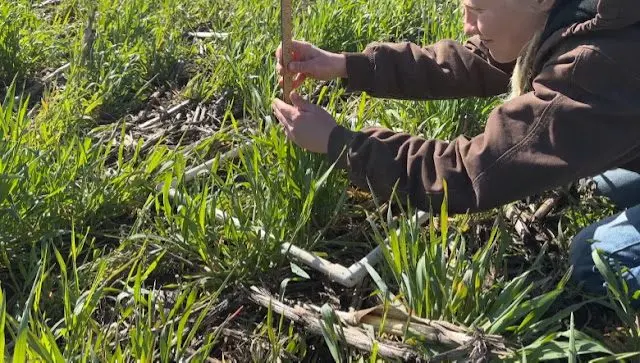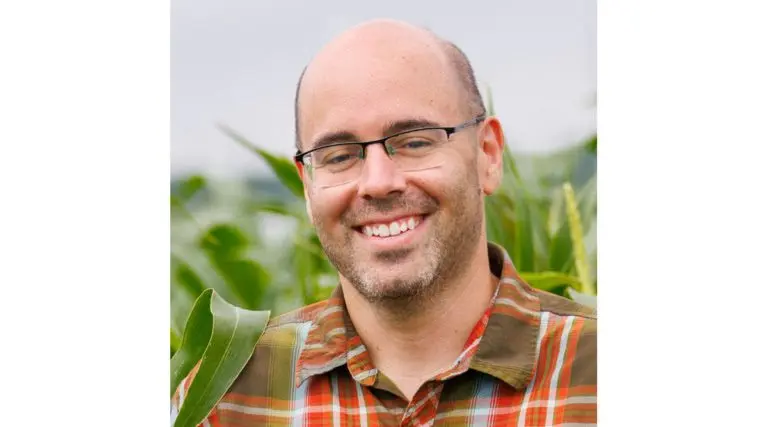
The NAS Prize in Food and Agriculture Sciences recognizes a mid-career U.S. scientist whose research has made extraordinary contributions to agriculture, food production or understanding the biology of species fundamental to agriculture. (Courtesy photo)
WASHINGTON — The Foundation for Food & Agriculture Research (FFAR) congratulates Professor James C. Schnable on winning the 2026 National Academy of Sciences (NAS) Prize in Food and Agriculture Sciences for pioneering genetics research that has improved the productivity of corn, sorghum and other crops.
The NAS Prize in Food and Agriculture Sciences recognizes a mid-career U.S. scientist whose research has made extraordinary contributions to agriculture, food production or understanding the biology of species fundamental to agriculture. The award includes a medal and a $100,000 prize. FFAR endowed the prize in 2017 to elevate and highlight scientific research that improves U.S. agriculture and food systems.
“Being selected for this prize is a tremendous honor that reflects the hard work and accomplishments of an incredible group of trainees and collaborators,” Schnable said. Schnable, a professor at the University of Nebraska–Lincoln, specializes in plant genetics and breeding. His research integrates quantitative genetics, advanced phenotyping, data science and other leading-edge technologies to accelerate plant breeding and provide farmers with real-time insights into crop performance. His innovations have led to improved crops that use nutrients more efficiently and can withstand environmental stressors.
“Dr. Schnable’s achievements exemplify the type of bold, interdisciplinary research FFAR strives to support,” said Saharah Moon Chapotin, FFAR executive director. “By combining genetics, engineering and computational tools, he’s transforming how we improve crops for U.S. farmers and communities. His work deepens scientific understanding and drives practical solutions that strengthen agricultural systems.”
“I grew up working in cornfields, seeing what it takes to move discoveries from idea to experimental results to commercial products and services, as well as the vast impact new technologies and discoveries can have for crop breeders and farmers,” Schnable said. “Now I get to spend my career building tools that help researchers across the public and private sectors go bigger and scale faster. I couldn’t ask for a better job.”
Foundation for Food & Agriculture Research
The Foundation for Food & Agriculture Research (FFAR) builds public-private partnerships to fund bold research addressing big food and agriculture challenges. FFAR was established in the 2014 Farm Bill to increase public agriculture research investments, fill knowledge gaps and complement the U.S. Department of Agriculture’s research agenda. FFAR’s model matches federal funding from Congress with private funding, delivering a powerful return on taxpayer investment. Through collaboration and partnerships, FFAR advances actionable science benefiting farmers, consumers and the environment.