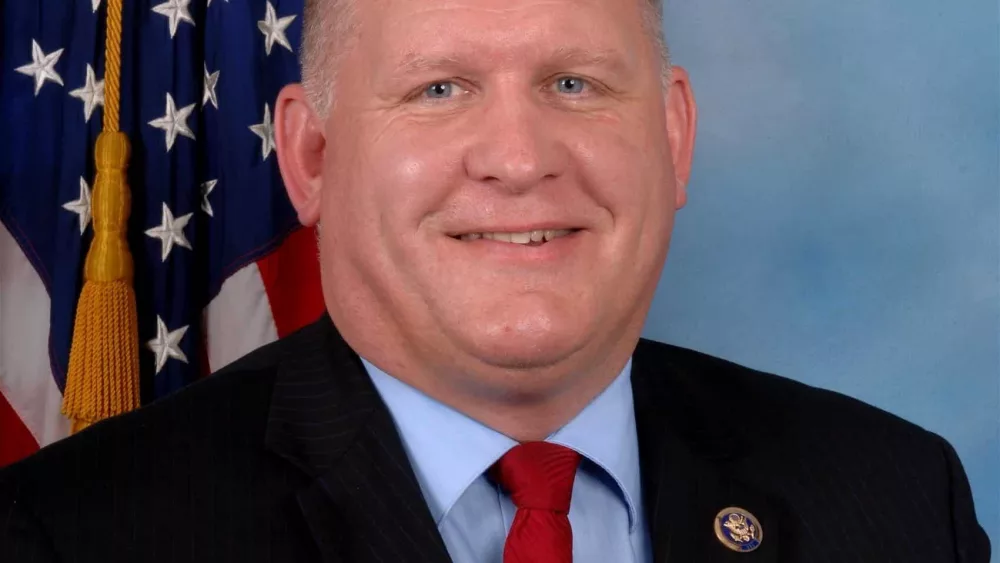
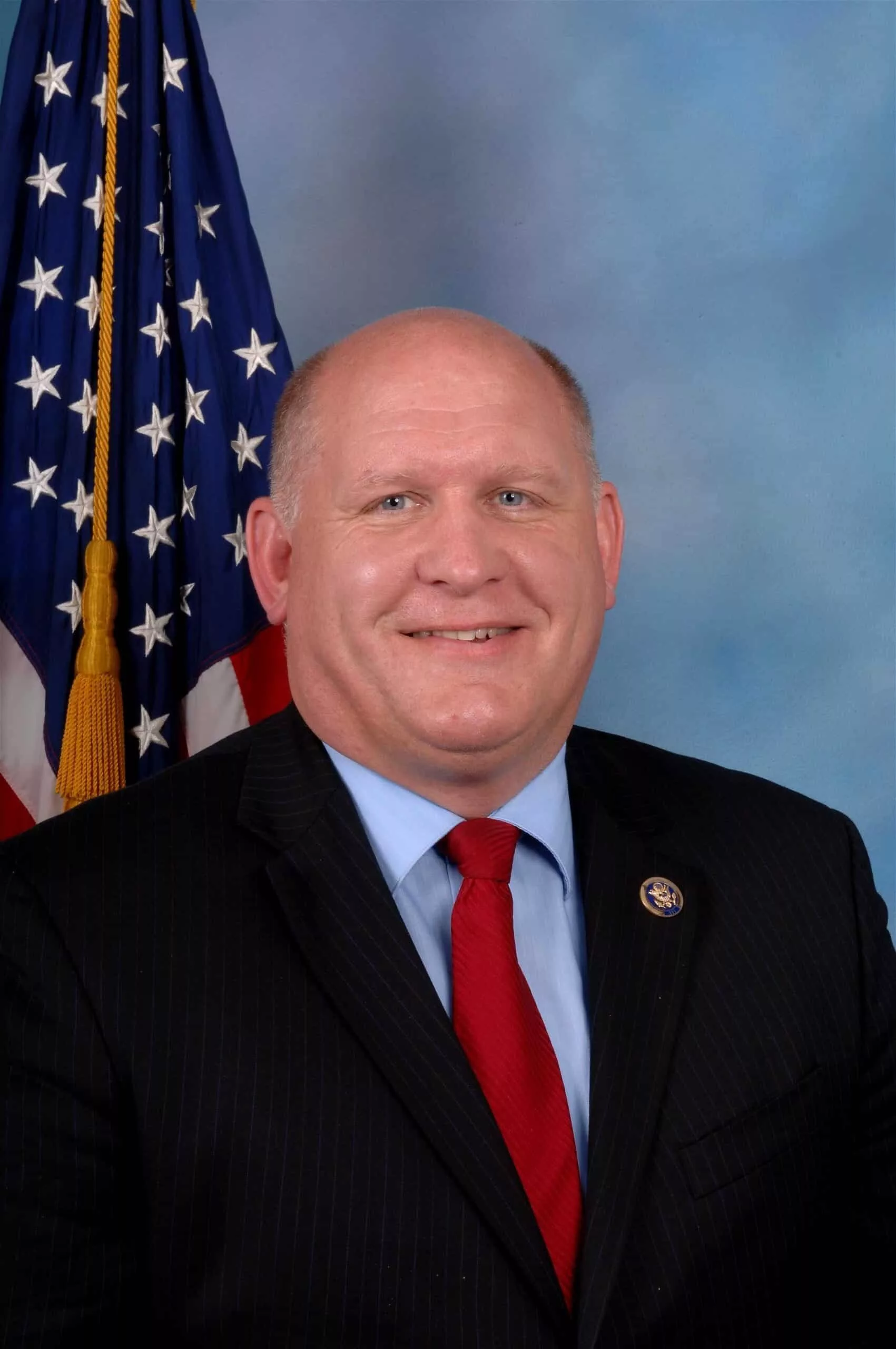
(WASHINGTON D.C.) — House Agriculture Committee Chairman Glenn “GT” Thompson (R-PA) says he is confident the Farm Food and National Security Act of 2026 will come to a full House floor vote before May 1st — and he’s calling on Congress to act quickly given the financial pressures facing America’s farm families.
Thompson joined Agriculture of America this week and offered an update on the bill’s progress, the possibility of additional emergency farmer aid, and his plans to modernize the H-2A agricultural guest worker program.
Farm Bill Advances Out of Committee with Bipartisan Support
The bill cleared the House Agriculture Committee on a 34-17 vote, with seven Democrats crossing the aisle in support. Chairman Thompson called the outcome a reflection of the bill’s practical, policy-driven approach, noting that the committee conducted listening sessions across 43 states and one territory before crafting the legislation.
“It’s practical policy — it’s not political games,” Thompson said. “And quite frankly, I think with what our farmers are needing right now, (it) gives them certainty. And so I think there’s an urgency in Congress in order to get this done.”
Thompson described the Farm Food and National Security Act of 2026 as completing what was started in last summer’s “One Big Beautiful Bill,” which addressed roughly 20% of a farm bill — primarily commodity title investments of $55-56 billion. The new legislation covers the remaining 80% of needed farm policy updates.
Senate Coordination Underway
Chairman Thompson expressed confidence in the bicameral process, praising Senate Agriculture Committee Chairman John Boozman (R-AR) for his leadership and noting that passing the House bill is critical to building momentum on the Senate side.
“This has to be a team effort between both chambers for it to be successful,” Thompson said. “I think he’s waiting with anticipation for what we will pass and send his direction.”
Additional Farmer Aid Could Come Separately
Beyond the Farm Bill itself, Chairman Thompson is pushing for a separate package of emergency farmer aid to help producers navigate rising input costs, fertilizer price spikes, and energy cost increases driven by ongoing geopolitical uncertainty.
Thompson said he has been engaged in conversations with USDA Ag Secretary Brooke Rollins since before the first tranche of aid was distributed, making clear that additional funding is needed — particularly for specialty crop growers.
On the question of dollar figures, Chairman Thompson said the Senate has been discussing a package in the range of $15 billion, with roughly $10 billion targeted at row crops. But Thompson is pushing for more — in the neighborhood of $20 billion or higher — to ensure specialty crop farmers and the forest products industry are not left behind. He specifically called for $200 million to help preserve sawmill infrastructure, arguing that without viable timber markets, proper forest management becomes impossible.
“We need to make sure that we’re taking care of our infrastructure within the forest products industry,” Thompson said. “I’ve been calling for 200 million for, to really to help making sure that we do not lose any more of our sawmills. Because if we do that, we don’t have any markets that would allow us to properly manage those forests in a healthy way. You need markets for the timber that you need to cut.”
Chairman Thompson added that “I think with everything our farmers are facing, this just needs to be a bridge and a bridge to all the great policies that we put in place for great investments as a part of HR1. And the updated policies that we have put into the Farm Food and Natural Security Act, it’ll be considered on the House floor. I anticipate, with confidence, before May 1st.”
H-2A Reform on the Horizon
Looking ahead, Chairman Thompson said his committee plans to release a discussion draft to look at reforming the H-2A agricultural guest worker program shortly after the farm bill is sent to the Senate. The draft will circulate for roughly three weeks to gather input from producers and processors before formal introduction.
“After this farm bill gets sent to the Senate, we’ll be releasing for a discussion draft, a bill that would, you know, really to modernize the H2A program, make sure it works for year round agriculture, something that would increase access, some commerce changes to it,” according to Thompson.
Thompson also called it potentially the first significant agricultural workforce reform since the Reagan administration.