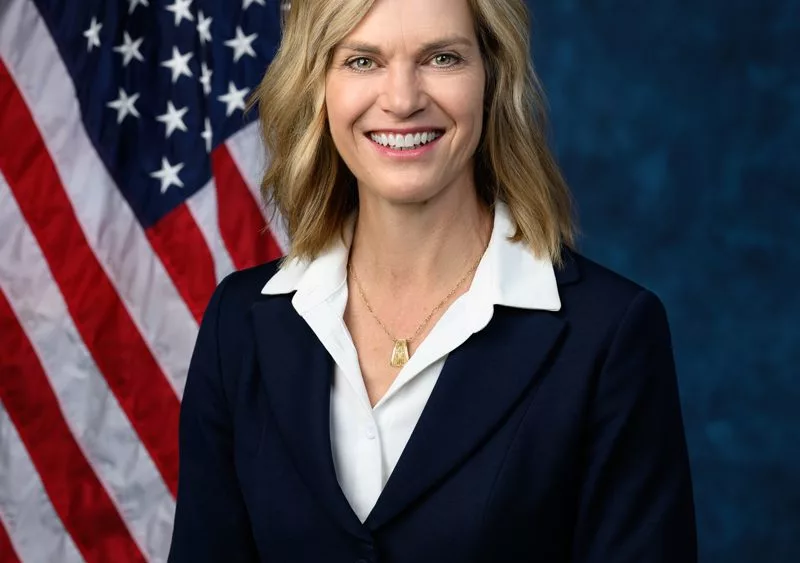
Washington, D.C. — Congresswoman Julie Fedorchak (R-ND) this week voted in favor of H.R. 6387, the Fire Improvement and Reforming Exceptional Events (FIRE) Act. The legislation will
“Federal policy today punishes states for emissions they don’t control and even for the steps they take to prevent wildfires. Counting prescribed burns the same as factory emissions is a clear policy failure that puts communities, producers, and local economies at a disadvantage,” Fedorchak said. “The FIRE Act brings consistency back to EPA’s exceptional events process, gives states a clearer path to compliance, and focuses air quality standards on emissions we can actually manage. That’s a more practical approach to protecting public health, supporting our producers and manufacturers, and reducing wildfire risk.”
Under current law, states may petition the Environmental Protection Agency (EPA) to exclude emissions from “exceptional events,” like naturally occurring wildfires, when complying with permitting requirements under the National Ambient Air Quality Standards (NAAQS). EPA’s review process has become increasingly restrictive and inconsistent, with unclear criteria and delays that can push states into nonattainment and trigger additional regulatory burdens. At the same time, emissions from prescribed burns used for wildfire mitigation are not eligible for this treatment and are instead counted the same as industrial emissions, creating a gap in how wildfire-related emissions are handled and disincentivizing proper wildfire mitigation practices.
The FIRE Act updates Section 319(b) of the Clean Air Act to clarify how emissions from wildfires, prescribed burns, and other exceptional events are treated in federal air quality reviews. It aligns the treatment of fire mitigation-related emissions with those outside a state’s control, strengthens coordination with EPA, and establishes a more timely and transparent process for exceptional event determinations. The bill provides greater certainty for state air quality planning while maintaining existing environmental protections.