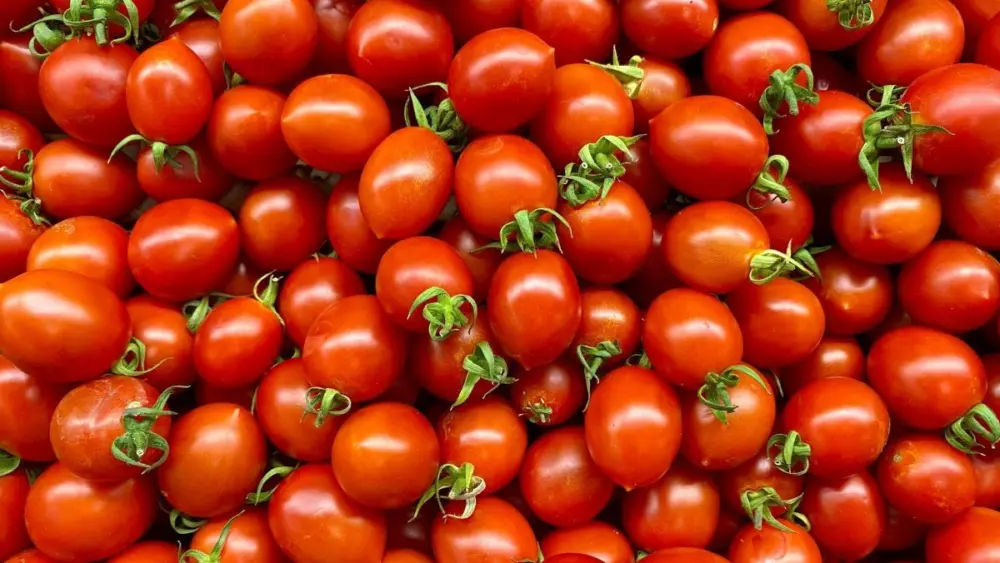
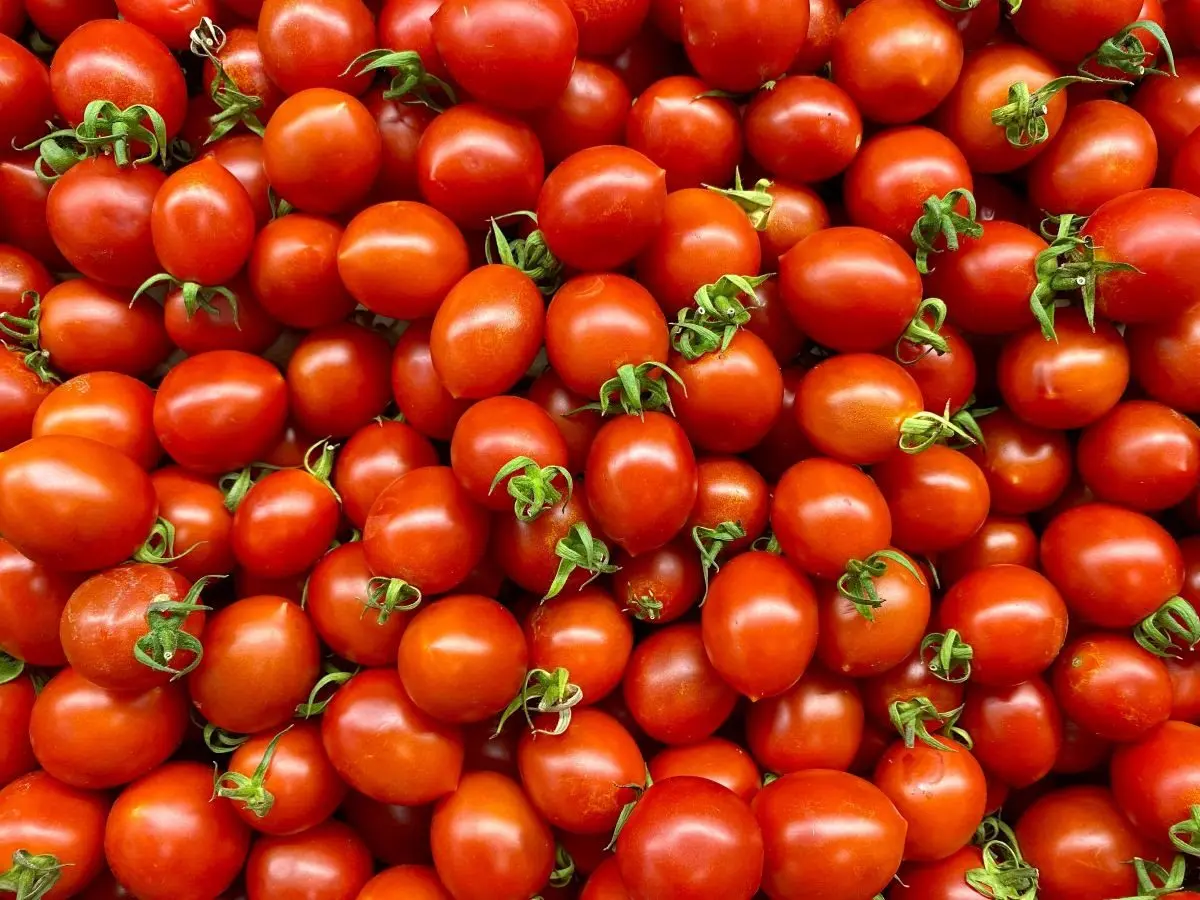
Photo courtesy of University of Minnesota’s College of Food, Agricultural and Natural Resource Sciences
ST. PAUL, Minn. (April 30, 2026) — New research from the University of Minnesota offers encouraging news for specialty crop growers interested in pollinator-friendly production. The study was conducted in summer 2025 by Research Fellow Gigi DiGiacomo and Dr. Chengyan Yue as part of a larger project, Buzzing with Potential: Exploring Consumers’ Willingness to Pay for Pollinator Services. The research found that consumers are willing to pay meaningful premiums for produce grown using practices that support pollinators — particularly when those practices are clearly communicated at the point of sale. The research, funded by the Minnesota Department of Agriculture’s Specialty Crop Block Grant (award #257809), is based on a choice experiment with 677 participants drawn largely from the Minneapolis farmers market and the Minnesota State Fair.
On average, consumers in the study were willing to pay about 50% or $1.94 more per pound for cherry tomatoes labeled as pollinator-friendly, compared to similar products without that claim. Locally grown products also carried a premium — about $1.08 per pound — reinforcing the continued importance of “local” as a marketing attribute. Notably, the pollinator-friendly claim itself carried most of the value. Third-party certification did not significantly increase willingness to pay for the average consumer, likely reflecting limited familiarity and lower trust relative to more established labels like organic. This finding suggests that, at least in direct-to-consumer settings, growers may not need to invest in certification to capture a portion of the available premium.
At the same time, the study makes clear that consumer preferences are far from uniform. Some customers are highly price sensitive and respond best to clear, simple messaging paired with reasonable pricing. Others — particularly urban consumers — place a strong emphasis on local origin and are less responsive to price changes, making them more receptive to premium positioning. A third group responds well to a combination of attributes, where both pollinator-friendly practices and local production are highlighted, and may benefit from tiered pricing strategies that offer multiple quality or attribute levels. There is also a segment of consumers for whom certification may become more important over time, especially as awareness of pollinator-friendly practices grows.
“Understanding your customer base is essential,” said DiGiacomo. “Our findings show that specialty crop growers — many of whom already depend on and support pollinators to enhance fruit set and quality — are well positioned to capture price premiums by highlighting these existing management practices.”
For growers, the takeaway is less about adopting a single marketing strategy and more about aligning production and messaging with target markets. Clear, accessible communication about pollinator-friendly practices — especially when paired with local identity — appears to resonate strongly with many consumers. In farmers markets and other direct sales environments, this may be as simple as signage or conversations with customers. In retail channels, labels and in-store messaging may play a larger role, particularly in urban markets.
As with any production change, the potential price premium should be weighed against the costs of implementing pollinator-friendly practices, such as habitat establishment or changes in pest management. The study focuses on consumer demand, so individual farm profitability will depend on how these premiums compare to added pollinator management costs.
“Our sample is local and represents urban, direct-to-consumer, and event-based shoppers. We would like to explore whether our findings apply to general Minnesota or Midwest consumers,” said Yue. “Additionally, it is possible that consumers value pollinator-friendly practices in self-pollinated vegetables differently from crops that rely on insect pollinators. Our research team will explore how consumers value the pollinator-friendly attribute across different crop types.”
Still, the results point to a clear opportunity: for growers already using or considering pollinator-supportive practices, there is measurable consumer interest — and in many cases, a willingness to pay —f or those efforts when they are effectively communicated.
For more information about the study, contact Gigi DiGiacomo, gigid@umn.edu or 612-710-1188. Complete research results are available in the recent HortScience publication, Heterogenous Consumer Preferences for Pollinator-friendly Produce: Implications for Specialty Crop Growers in the Upper Midwest, U.S. from Choice Experiments.
About CFANS
The University of Minnesota’s College of Food, Agricultural and Natural Resource Sciences (CFANS) strives to inspire minds, nourish people, and sustainably enhance the natural environment. CFANS has a legacy of innovation, bringing discoveries to life through science and educating the next generation of leaders. Every day, students, faculty, and researchers use science to address the grand challenges of the world today and in the future. CFANS offers an unparalleled expanse of experiential learning opportunities for students and the community, with 12 academic departments, 10 research and outreach centers across the state, the Minnesota Landscape Arboretum, the Bell Museum, and dozens of interdisciplinary centers.