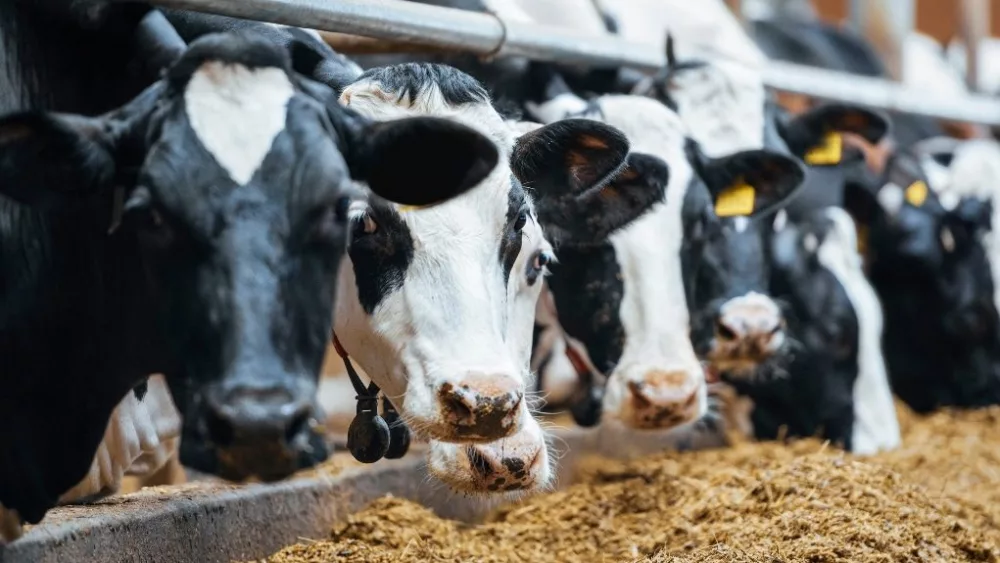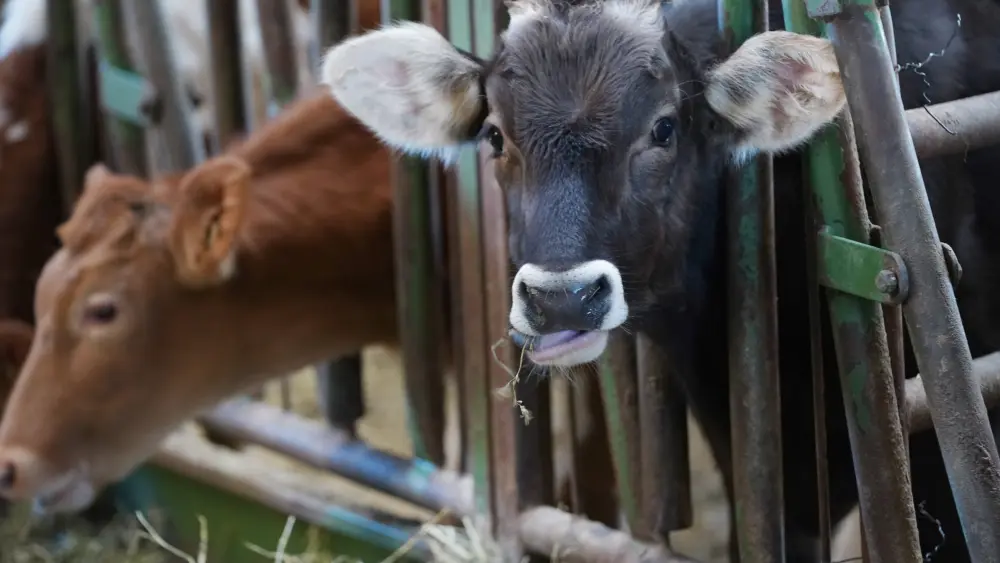
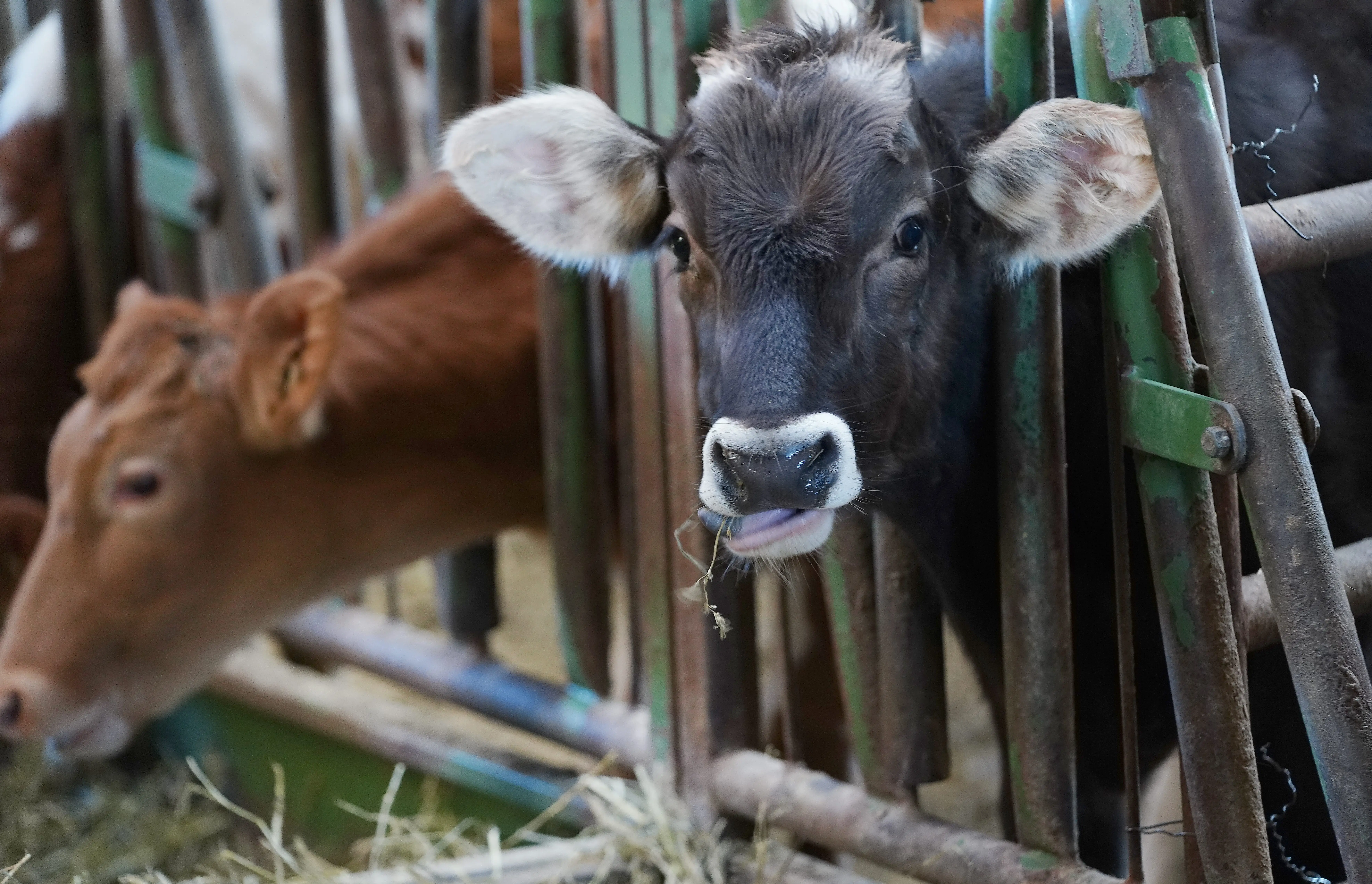
Researchers from Purdue’s colleges of agriculture and engineering have published a roadmap leading to sustainable livestock production, which plays a critical role in global food security. (Photo courtesy of Purdue)
WEST LAFAYETTE, Ind. — What’s good for the planet can also benefit animal welfare, livestock production and the food supply of a growing world’s population, according to a comprehensive research literature review conducted by Purdue University scientists and engineers.
Doing so will require a comprehensive and integrated approach to the many environmental impacts of ruminant production, said Purdue’s Hinayah Rojas de Oliveira, assistant professor of animal sciences. “There is no silver bullet solution. A combination of strategies will be required. We need to leverage all the tools at our disposal, from genetics and nutrition to management and technological, to create a more sustainable and resilient livestock industry.”
Rojas led an interdisciplinary team that published its literature review regarding environmental sustainability in ruminants — an animal group that includes cattle, sheep and goats — in the journal Agriculture. The journal featured the researchers’ work on the cover of a special issue devoted to the threats posed by environmental factors to farm animals.
“New research findings are constantly emerging across genetics, nutrition and microbiome science, as well as in the commercial equipment available for animal monitoring,” Rojas said.
The paper synthesizes the latest research in more than 200 publications in genetics, nutrition, the microbiome and management to provide a holistic road map for the future of ruminant sustainability.
“This review can serve as a valuable resource for a wide range of stakeholders,” Rojas said. “For producers, it outlines actionable strategies to improve efficiency and reduce their environmental footprint. For policymakers, it provides a scientific basis for developing evidence-based policies to support sustainable agriculture. For the industry, it showcases emerging technologies and innovations that can drive both environmental and economic benefits.”
The co-authors from the Department of Animal Sciences are graduate student Yufeng Shang, assistant professor Tingting Ju, postdoctoral researcher Henrique Mulim-McCarthy and associate professor Jacquelyn Boerman. From the Department of Agricultural and Biological Engineering (ABE) is assistant professor Upinder Kaur. And from ABE and the School of Sustainability Engineering and Environmental Engineering is associate professor Shweta Singh.
“This collaborative effort was essential to cover the breadth of topics in the review, from genetics and genomics to engineering and environmental science,” Rojas said. “Our work is driven by the goal of finding solutions that allow for a thriving and sustainable livestock sector for generations to come.”
The Purdue researchers cited a report of the Food and Agriculture Organization of the United Nations that framed the stark dilemma facing the livestock sector. The sector accounts for nearly 18% of global greenhouse gas emissions. Its operations also consume significant quantities of fresh water, require broad swaths of land for grazing and feed cultivation, and generate ecologically harmful runoff.
At the same time, livestock production helps ensure global food security. The sector’s growth is projected to exceed 70% from 2005 to 2050 to meet the needs of an increasingly affluent and urbanizing world population that could reach 9.6 billion.
Some of the good news stems from the very ruminant physiological processes that contribute to greenhouse gas emissions. Ruminants have four-chambered stomachs that help them digest plant types that are inedible to humans. The rumen, the largest of the four chambers, contains a collection of microorganisms (microbiome) consisting of bacteria, fungi, and biologically distinct groups of single-celled organisms called archaea and protozoa.
“The rumen microbiome is a highly complex microbial system that plays an essential role in ruminant nutrition and methane production,” the research team noted in their review. “Recent studies have demonstrated that the host’s genetic makeup can influence the structure and function of the rumen microbiome, affecting both nutrient utilization and methane emissions.”
As the review in Agriculture noted, if microbiome composition can be inherited, then selective breeding can help improve both environmental quality and livestock productivity. “This opens up exciting new avenues for research and breeding that were unimaginable just a decade ago,” Rojas said.
Selectively breeding livestock could also help the animals to more effectively convert feed into meat or milk, which could improve profits while reducing their environmental impact. Feed is the most expensive aspect of most livestock operations, “and is tightly linked to greenhouse gas emissions and land use,” Rojas and her colleagues noted.
The evolution of novel sensor technologies and the role of AI in processing vast amounts of data generated can further bolster the high level of precision needed for sustainable livestock production.
The Purdue team also called upon researchers to enlist farmers as active co-participants in their research and development projects to help ensure the adoption of useful innovations. Meeting the ambitious greenhouse gas emissions reductions that global organizations and national governments have committed to achieving by 2050 requires such concerted and integrated effort, Rojas said. “While challenging, the rapid pace of innovation offers a great deal of hope.”
This work was supported by Purdue’s Elevating the Visibility of Research Initiative, a joint effort of the Office of Agricultural Research and Graduate Education and the Executive Vice President for Research.
About Purdue Agriculture
Purdue University’s College of Agriculture is one of the world’s leading colleges of agricultural, food, life and natural resource sciences. The college is committed to preparing students to make a difference in whatever careers they pursue; stretching the frontiers of science to discover solutions to some of our most pressing global, regional and local challenges; and, through Purdue Extension and other engagement programs, educating the people of Indiana, the nation and the world to improve their lives and livelihoods. To learn more about Purdue Agriculture, visit this site.
About Purdue University
Purdue University is a public research university leading with excellence at scale. Ranked among top 10 public universities in the United States, Purdue discovers, disseminates and deploys knowledge with a quality and at a scale second to none. More than 106,000 students study at Purdue across multiple campuses, locations and modalities, including more than 57,000 at our main campus locations in West Lafayette and Indianapolis. Committed to affordability and accessibility, Purdue’s main campus has frozen tuition 14 years in a row. See how Purdue never stops in the persistent pursuit of the next giant leap — including its integrated, comprehensive Indianapolis urban expansion; the Mitch Daniels School of Business; Purdue Computes; and the One Health initiative — at https://www.purdue.edu/