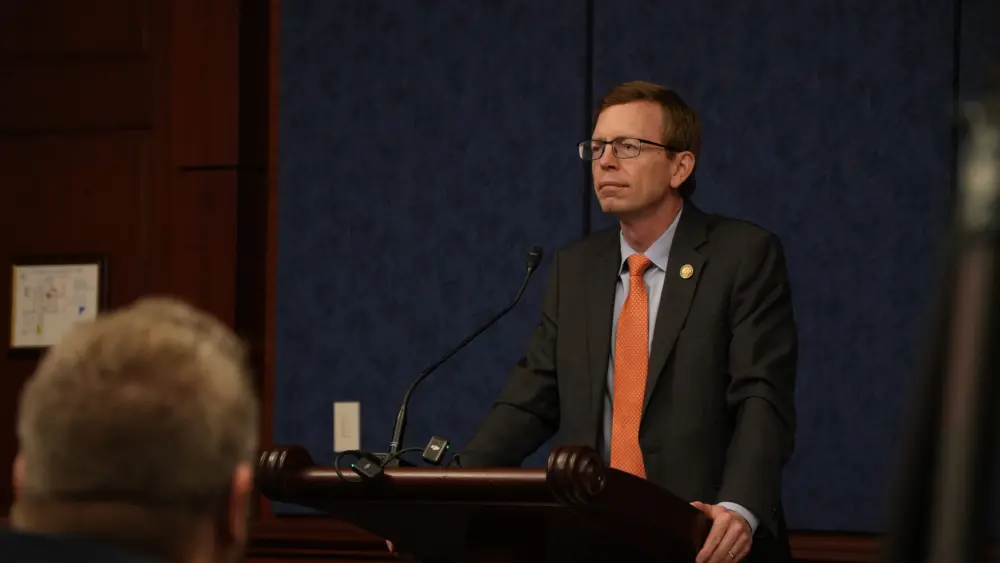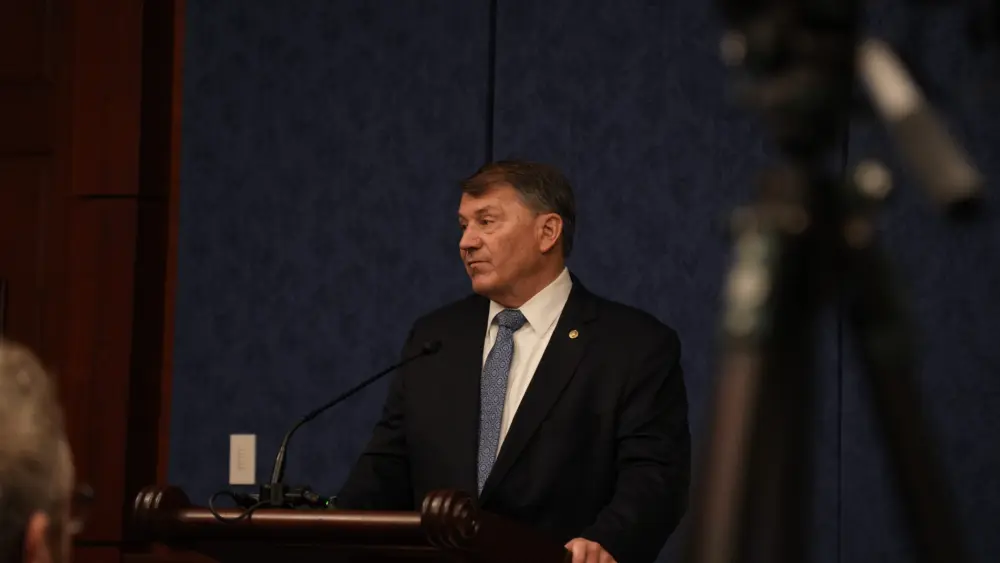
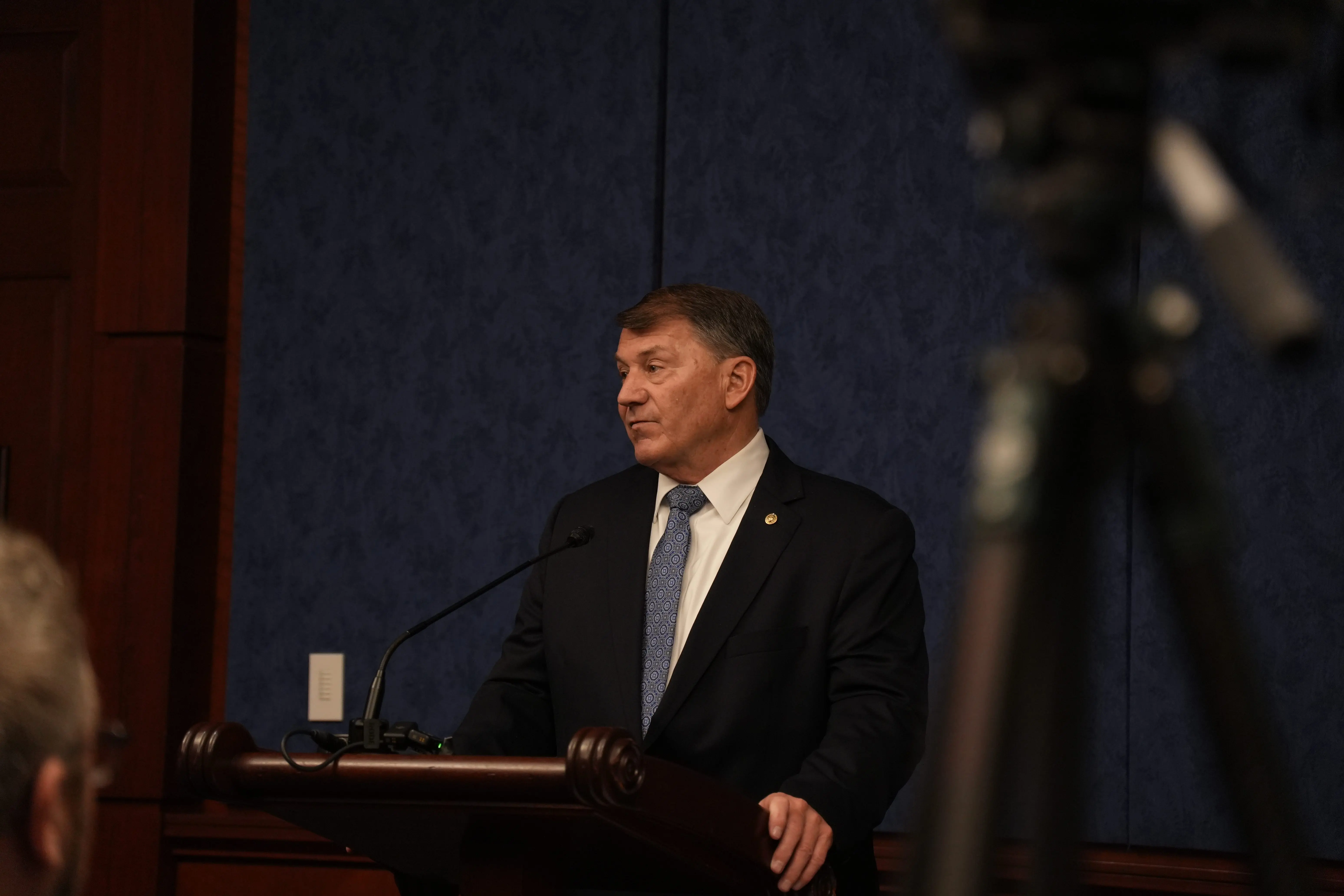
(WASHINGTON D.C.) — Senator Mike Rounds (R-SD) touched on a wide range of agriculture priorities during a Capitol Hill conversation last week (featured Thursday on Agriculture of America), weighing in on rising input costs, the push to onshore fertilizer production, the future of mandatory country-of-origin labeling, and the labeling fight over lab-grown meat.
Senator Rounds opened by tying global tensions back to the farm gate. He pointed to U.S. confrontation with Iran and the disruption in the Strait of Hormuz — a chokepoint for roughly 20% of the world’s petroleum products — as a driver of higher fuel and fertilizer costs heading into planting. Gasoline is running just over $4 a gallon and diesel is pushing close to $5 in parts of his region, he said, with fertilizer prices potentially up double digits depending on product and timing of application. “All of it will impact their (farmers) ability to make a profit this year,” Rounds said.
The senator said he supports USDA Secretary Brooke Rollins’ recent announcement of fertilizer initiatives developed with the Commerce Department to expand domestic production, but cautioned that onshoring is a long-term play. “You can’t just throw up a fertilizer plant,” he said. In the near term, Rounds noted that India’s government is now buying fertilizer directly and distributing it to its producers, putting U.S. buyers in direct competition with a sovereign purchaser and pushing prices higher. To bridge the gap, he is backing a supplemental package aimed at offsetting elevated fertilizer expenses for producers in the farm program. “We’ve got to look both at short-term needs and then long-term fixes,” he said.
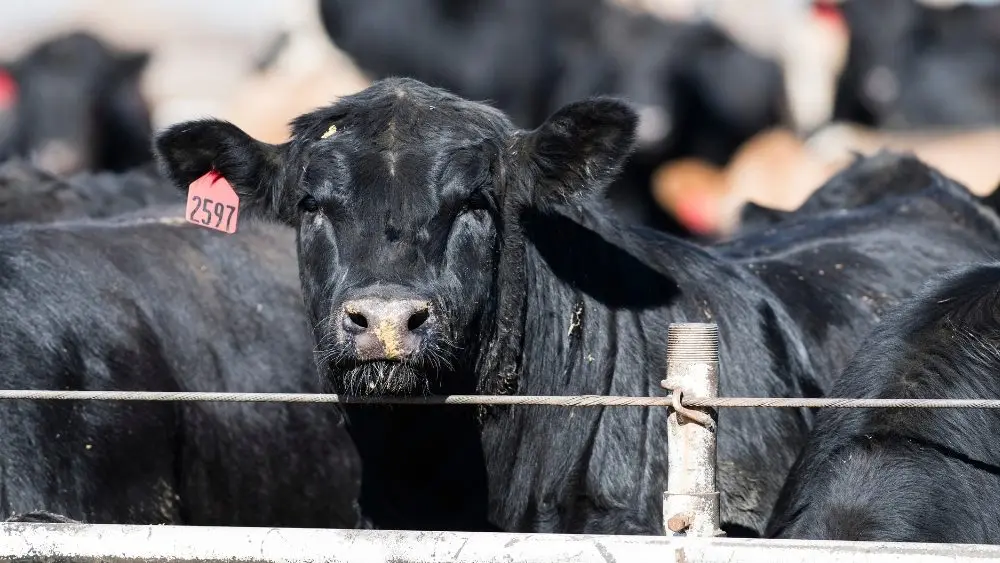
On mandatory country-of-origin labeling, Rounds said the path runs through trade policy, not just legislation. M-COOL was repealed in 2015 because it was not built into U.S. trade agreements with Mexico and Canada, leaving the country exposed to retaliatory WTO action. His proposal would require M-COOL to be included in any future trade agreement or modification with Canada and Mexico, so reauthorization would not put the U.S. in violation of its trade commitments. He said he doesn’t expect M-COOL to make it into this year’s farm bill, citing a “disjointed message” among ag groups and resistance from the four major packers that control roughly 85% of U.S. beef processing. He did credit the administration for tightening the voluntary “Product of USA” claim to require that animals be born, raised, fed and processed in the U.S., calling it progress while maintaining that mandatory labeling remains the ultimate goal.
Rounds closed with a sharp take on lab-grown meat, saying it’s “high time” the products are clearly labeled for what they are. He argued lab-grown or plant-based products should not be marketed as meat and consumers deserve to know exactly what they’re buying. “If they’re proud of what they did, they shouldn’t be afraid to label it that way,” he said. “If they’re trying to make it look like it’s actually meat, then I got a problem with that — that’s false advertising.”
Hear the full conversation from Thursday’s AOA in Segment Four below: