John Deere’s goal is to ensure its producers feel confident with its hay equipment, so no matter the time frame, circumstances or who’s in the seat, they can expect a quality cut or a quality square bale every time.
BOONE, Iowa – John Deere brought one message to this year’s Farm Progress Show: technology should take work off the operator’s plate. Four Deere team members told Agriculture of America how the company is applying that idea across data, combines, balers and tractors. That includes a new AI assistant, model year 2027 combine automation, hands-free baling and a redesigned 6R cab.
JD: An AI Assistant Built on Your Farm’s Data
The biggest headline from the show was JD, an AI assistant built into John Deere Operations Center. Jackson Baca, group product marketing manager for John Deere, said it is designed to help customers analyze their data faster than before.
“JD is more than a generic chatbot,” Baca said. “This AI assistant that we’ve developed is all built on the context of your data that you’ve been collecting in Operations Center. So when you ask it a question, it’s gonna give you an answer based on your farm, not on a theoretical farm.”
Baca said Deere built it to feel conversational. Farmers open it by clicking the JD button in the top right corner of Operations Center. “Just think about, how would you talk to your neighbor about your farm in the coffee shop?” he said. “That’s how we design it for that easy conversation.”
Rather than pulling reports and digging through them, farmers can start with a question. They can talk to JD by voice while driving, use it on equipment mobile, or open it in Operations Center web back at the desk. Chat history is saved so users can return and go deeper later.
Data privacy, always a top question with AI, was part of the discussion. Baca said JD is part of Operations Center, so data is treated the way it has been “for decades.” He said farmers control which third parties can access their data. Deere also announced a farmer data commitment during the show, which Baca described as reinforcing existing practice. “There’s nothing new there,” he said. “We’re just trying to put it into simple terms.”
JD is rolling out through an early access program that started at Farm Progress, and farmers can sign up in the Deere booth. Baca said Deere wants feedback before a wider release.
“Our farmers aren’t managing data, they’re managing a business,” Baca said. “Farmers are already expert decision makers, and so we just want to help highlight more about their operation.”
Combine Automation Targets Labor, Time and Data
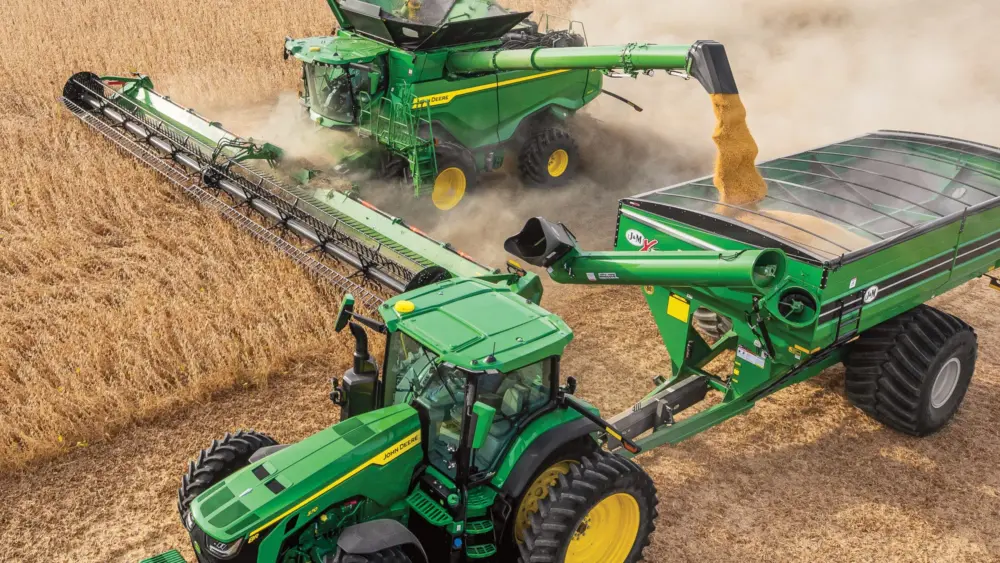
On the combine side, Justin Heimsoth, go-to-market manager for John Deere, said Deere’s automation work is aimed at three problems customers keep raising: labor shortages, tight harvest windows, and more data than they know what to do with.
For labor, Deere is focused on harvest settings automation. It uses an outcome-based system built around losses and grain quality to keep combine settings dialed in, “so the operator isn’t chasing settings all day long,” Heimsoth said. Predictive ground speed automation addresses the harvest window by helping operators stay productive.
Operations Center covers the third problem. “We like to say the harvest is your scorecard for the next growing season,” Heimsoth said. “It helps inform decisions on what to do better next year.”
Looking to model year 2027, Heimsoth said Deere will offer a way to set a limit based on throughput, using harvest settings automation and predictive ground speed automation together. That matters most for large operations, where logistics can be the bottleneck. “Knowing how many bushels an hour is going to be going through those machines helps them plan for how many trucks, how many grain carts, so on and so forth, so they can keep those machines moving,” he said.
Heimsoth stressed that customer feedback drives these upgrades. “All of these advancements don’t just come out of thin air,” he said. “We’re working directly with customers, we’re asking what’s important to them, what problems are they trying to solve.”
Hands-Free Baling: Tractor Steers, Baler Weaves
Kaylene Ballesteros, hay and forage market manager for John Deere, said the company’s hands-free baling experience was one of the show’s popular demos. It works in corn and wheat straw, and the timing suits the season.
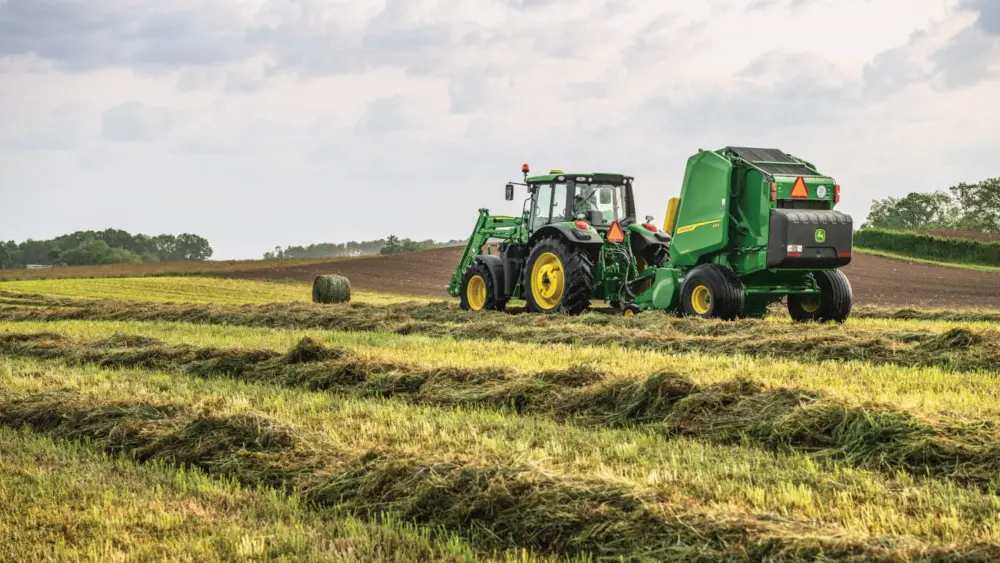
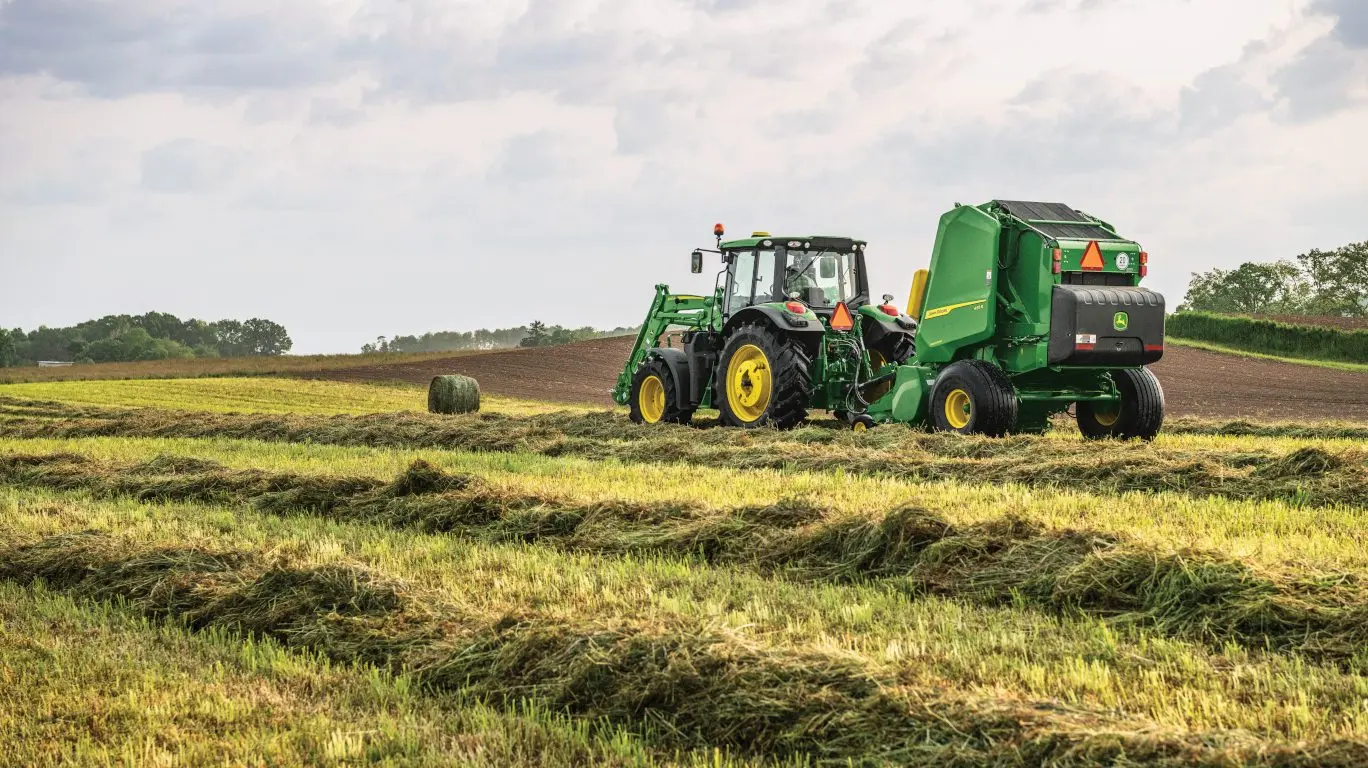
The system combines existing technology. The Autotrack, Autopath and Autotrack Turn Automation stack, already used on combines, extends to baling. That pairs with Deere’s baler automation, SpeedGate, and the weave feature introduced last year. “You marry them up and you’ve got the ability to keep your tractor going straight and your baler does the weaving for you,” Ballesteros said.
Deere measured about a 76% reduction in in-cab operator activity with the system. Ballesteros said that changes how operators spend their day. “I could stop and I could think about something else,” she said, describing what she has heard from newer Autotrack users. “I could think about what maybe was going on in another field or what was being done back at the shop. I could make a phone call.”
She added that experienced users are already sold. “Once you get in the seat and once you try it and once you use it, you don’t want to give it up.”
Windrows are never perfect, Ballesteros noted. “Between slopes and drought and other environmental factors, wind, you just don’t have that perfect windrow,” she said. That’s why the baler keeps weaving on the back end while the tractor handles guidance up front. Dealers are set up to run demos.
The 6R: More Power, More Comfort, More Automation
The tractor pulling that baler at the show was the 6R. Anne Anderson, marketing manager for the 6 Series at John Deere, said the new models for 2027 bring more power, more hydraulic capability and more integrated precision ag options.
Several features support the hands-free baling stack. The StarFire 7500 receiver is now standard to support guidance and keep the tractor on the AutoTrack line. The IVT transmission, with a PowerShift option, unlocks the ability to stop the baler so gate automation can release the bale. “We know they always want to end the day with a lot less stress, less fatigue, and less decision making,” Anderson said. “Honestly, they want to feel better when they get out of the cab to go do whatever they have to do afterwards.”
Much of the redesign centers on operators who spend 10 to 12 hours a day in the cab. It’s bigger, with a new massaging seat with heat and air conditioning, foot pegs, more glass area for watching rear implements, and improved seat swivel. The command arm controls match those of the 2027 8R and are fully configurable. “They don’t have to hunt and peck for the lever that they need to pull,” Anderson said. Operators can even program the drive lever to answer a phone call.
Anderson also pointed to the 6R’s versatility for livestock producers who run row crops too. It can handle hay, manure management and planter duty, pulling a 12-row or 16-row planter. The E19 PowerShift can run in manual mode or auto mode, where a speed command gets the tractor up to speed efficiently on the road.
Anderson said reaction at the show was enthusiastic, and one question kept coming up. “They love it. When can I get one? When’s it going to land here? That’s probably the most common question.”
Where to Learn More
Each guest sent farmers to the same place: their local John Deere dealer. Heimsoth called dealers “our source of truth.” Information on JD and the farmer data commitment is at deere.com/yourdata, and details on the 6R and other equipment are at Deere.com.
***AUDIO*** Hear our full conversations in the episodes of American Ag Today below: