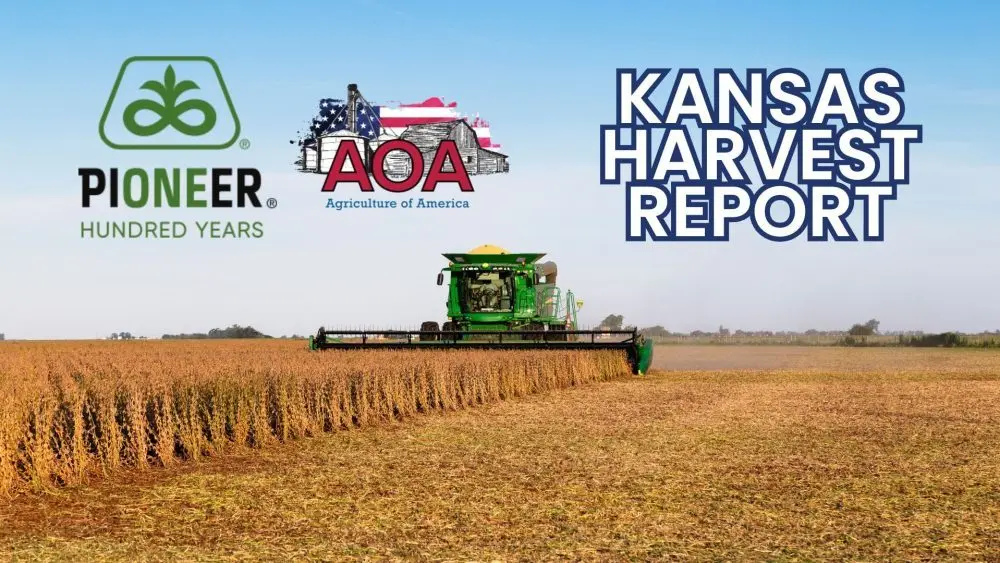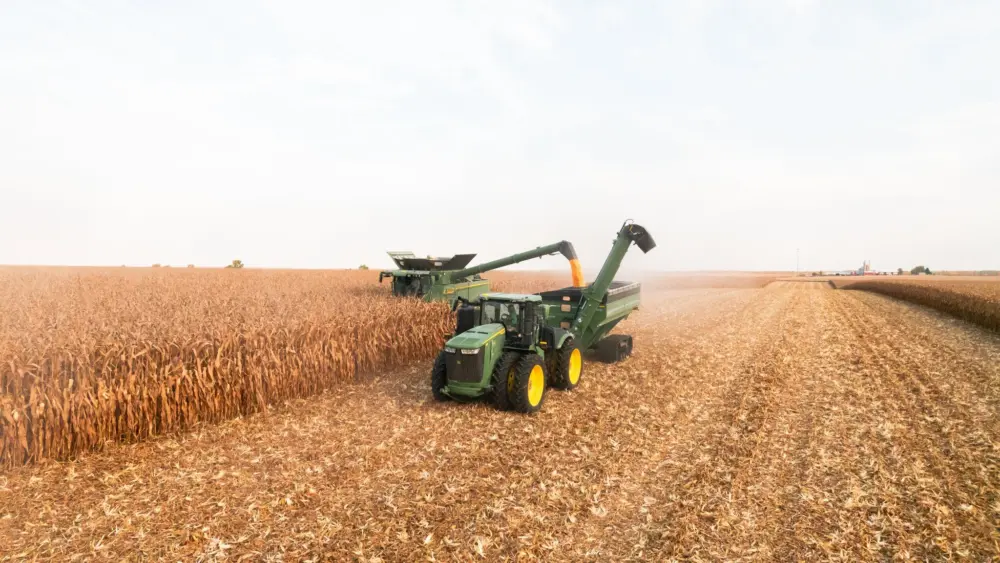
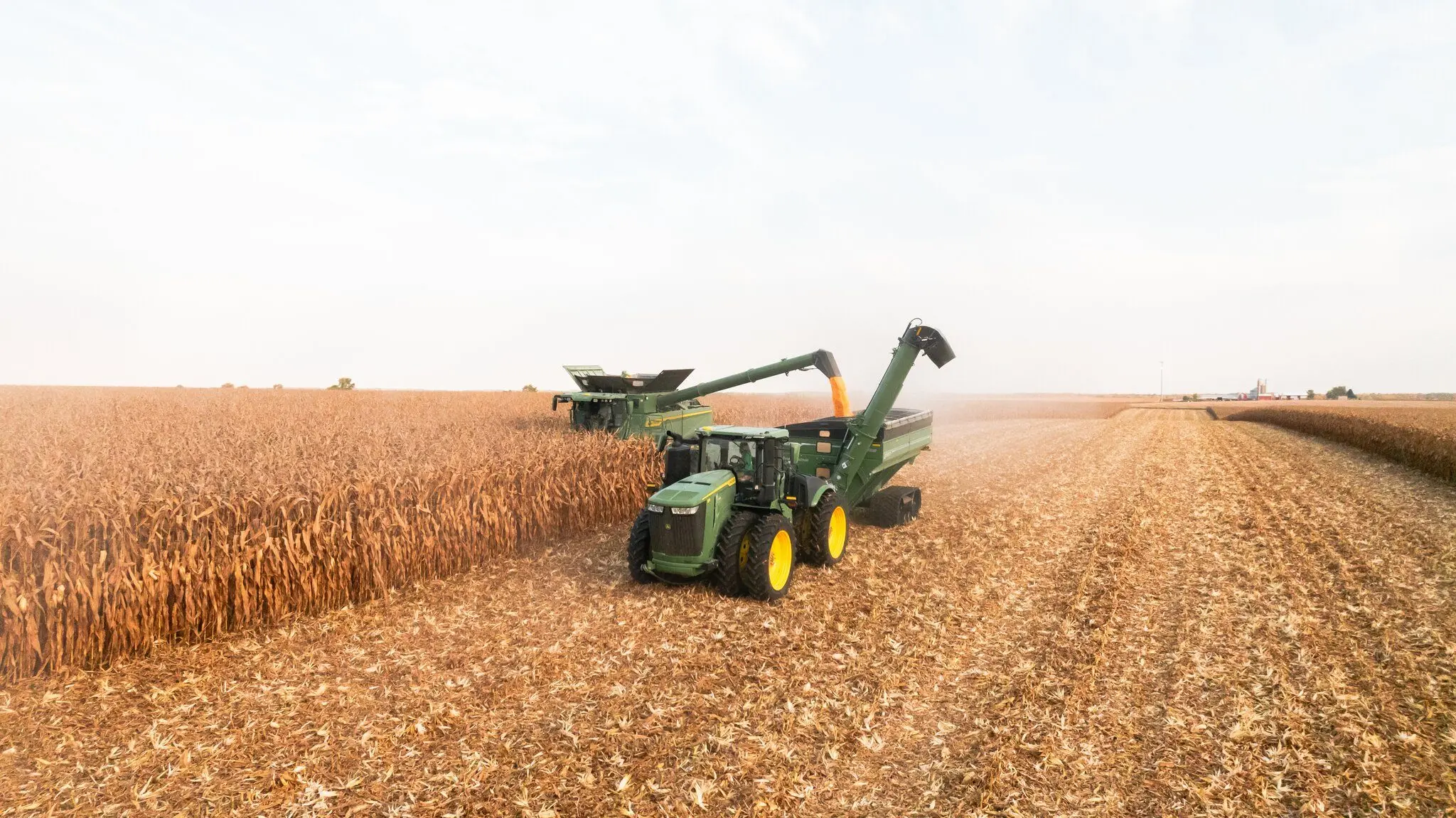
Photo courtesy of Pioneer
The most important corn harvest decision this fall isn’t when to start — it’s which field to start with.
Many growers have harvested corn at high moistures when late planting or cool temperatures have delayed crop development. While harvesting around 20% moisture can lower drying costs, waiting isn’t always the best option. Growers may need to begin harvest at about 25% moisture if grain or stalk quality starts deteriorating.
Deciding whether to let corn continue drying in the field or begin harvest at a higher moisture level comes down to closely monitoring both grain moisture and crop condition at physiological maturity. When the black layer forms, kernel moisture is typically around 35%, although it can vary depending on environmental conditions and hybrid characteristics. Corn drydown is tightly linked to GDU accumulation. For this reason, corn that matures earlier should dry down faster, while later maturing corn has fewer warm days and will dry down at a slower rate.
Ideally, growers begin scouting fields two to three weeks ahead of their expected harvest date to identify potential issues and prioritize fields before losses occur. With harvest already underway in parts of the Corn Belt — and weather delaying fieldwork in others — scouting should continue as harvest progresses.
Wet fall weather delays grain drying and thus subjects the crop to an extended period in the field following maturity, potentially leading to increased stalk and ear rots, dropped ears, harvest delays and increased field losses.
Dry weather is conducive to fast drydown and timely harvest. However, drought stress can cause poor stalk quality, and the crop may deteriorate rapidly due to standability or grain quality issues. In either situation, closely monitoring individual fields can help growers determine which acres may need to move up in the harvest order.
Both wet and dry conditions can cause weak stalks, and stalk lodging can result in significant harvest losses. Weak stalks can be detected by pinching the stalk at the first or second elongated internode above the ground or pushing the plant sideways eight to 12 inches at the ear level. The stalk collapsing or failing to return to the vertical position indicates stalk rots, and that field needs to be prioritized for early harvest.
“With the challenges of the 2026 growing season, stalk rots and standability issues are a potential concern for this year,” said Ryan Bates, Pioneer agronomy innovation manager. “You will need to get out to your fields and push on the corn stalks. If you find plants that are collapsing, split crowns and stalks, and look at the tissue to see if stalk rots are developing.”
To scout ear damage, strip back the husks on five plants in five areas of the field to check for insect feeding or ear rots. If these problems are severe, consider early harvesting and drying grain below 14% moisture to stop progression of both insects and diseases to maintain the best possible grain quality.
Timing corn harvest to maximize profitability usually means striking a balance between maximizing bushels harvested and minimizing drying costs. Monitoring crop and environmental conditions is crucial to prioritize which fields to harvest for the most grain.
SOURCE: Pioneer