With the House set to vote next week on legislation allowing year-round E15 and making targeted reforms to the RFS small refinery exemption (SRE) program, anti-ethanol rhetoric and misinformation have reached a fever pitch. In recent days, groups like the Freedom Caucus Foundation, Small Refineries of America (a front group for major refining companies like PBF, Delta, and HF Sinclair) and certain members of Congress have ramped up their inflammatory—and completely erroneous—attacks on E15, ethanol, and America’s farmers.
Enough is enough. It’s time to set the record straight.
Without a shred of credible evidence or analysis, the anti-E15 crowd suggests that simply allowing retail gas stations to voluntarily offer E15 would somehow lead to “higher gas prices” and restricting SREs to truly small refining companies would somehow result in “refinery closures” and “lost jobs.”
They’ve apparently adopted their motto from Chico Marx, who famously asked, “Who you gonna believe…me or your own lyin’ eyes?”
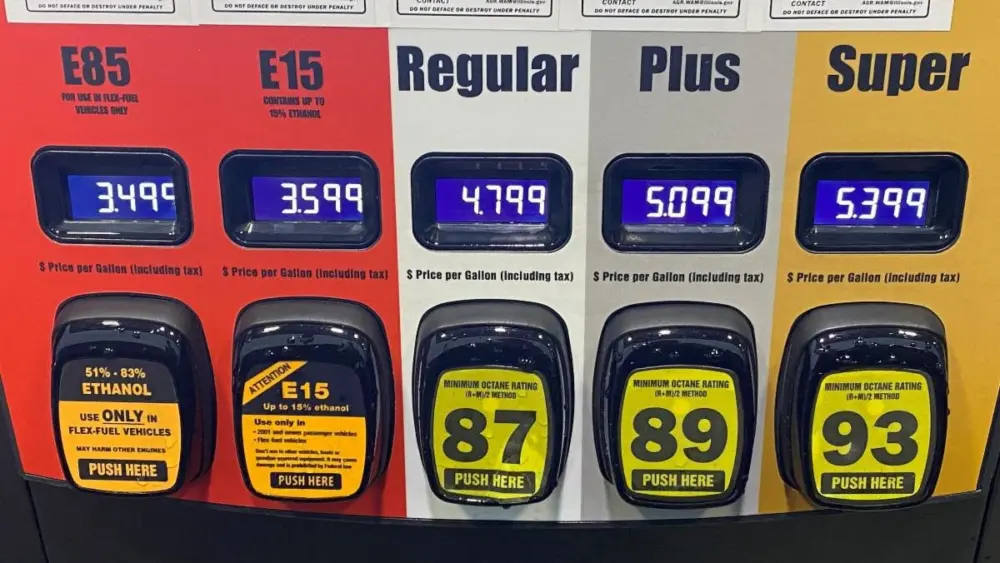
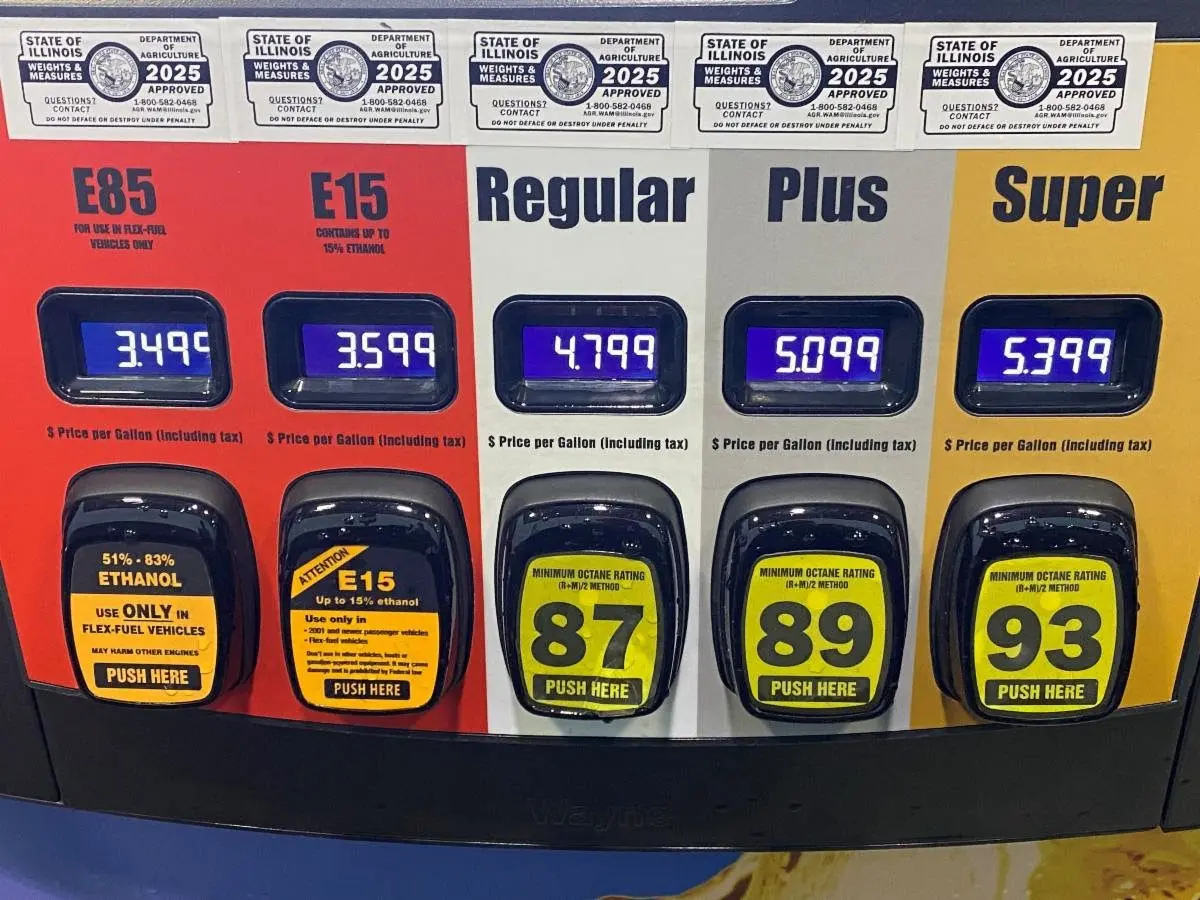
When it comes to E15, you should believe your eyes—not the hysterical nonsense generated by Beltway PR hacks and hired guns. When you pull into any retail gas station offering E15 today, your own eyes will see that the fuel is the lowest-cost option available. E15 typically sells for 15-40 cents per gallon less than standard E10 gasoline; often times, the savings are even greater, like at this station in Waterloo, Illinois, just yesterday.
According to e15prices.com, the average E15 price (reported by real people at real gas stations) in recent weeks has been 42 cents per gallon less than E10 prices at those same stations. That’s a savings of over 10 percent. And when compared to prices for E0 (what many like to call “ethanol-free” gasoline), E15 is typically priced at a discount of $1 or more. Yet, the anti-E15 cabal expects you to somehow believe that voluntary E15 expansion (i.e., NO ONE is asking for E15 to be mandated) mysteriously translates to higher pump prices.
It’s common sense: ethanol costs less than gasoline—a lot less—at wholesale terminals where fuels are blended. Adding more low-cost ethanol will result in a lower price for the finished fuel. In fact, a fuel blender in the Chicago market could buy a gallon of ethanol for just $2 yesterday, compared to $3.60 per gallon for gasoline blendstock.
Now, the refiners’ convoluted arguments about E15 prices typically hinge on two well-worn myths.
First, they say E15 has less energy than E10 and, thus, delivers lower fuel economy. But actual testing of 20 late-model vehicles by the University of California, Riverside, shows that the difference in miles per gallon is negligible. On average, the vehicles tested saw a 1 percent fuel economy reduction when using E15 instead of E10. That means a car getting 29 miles per gallon on E10 would be expected to get 28.7 miles per gallon on E15. And when E15 is priced 8 percent lower than E10 at the pump, drivers choosing E15 enjoy a much lower cost per mile traveled than drivers choosing E10—and that’s what really matters.
Second, refiners claim E15 prices are higher due to their “cost of compliance” with the RFS. That is, they argue they must buy RIN credits from other refiners (which is itself a fallacy) to comply with the RFS, and they pass that cost on to consumers in the form of higher gas prices (never mind that many refiners have previously told shareholders and customers that they “eat” RIN costs and can’t pass them on).
But here’s where that argument falls completely apart. The $2 gallon of ethanol mentioned earlier comes with a free RIN credit attached! The party who buys the ethanol detaches the RIN credit and sells it to intransigent refiners who refuse to buy and blend ethanol themselves. The current value of an ethanol RIN credit is…$2. You read that right. Blenders and refiners can buy a gallon of ethanol WITH an attached RIN credit, which by itself is worth $2, for a total of $2. In other words, the net cost of ethanol for the buyer (after selling the RIN) is close to $0.00!
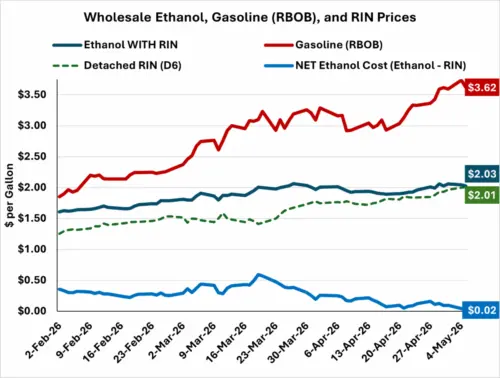
In this context, “Ethanol Free” takes on an entirely new meaning. Ethanol’s low cost, coupled with blenders sharing some of their revenue from selling RINs with consumers, are the big reasons we see E15 priced well below standard gasoline today.
If some refiners would rather buy a RIN for $2 from their competitor than buy and blend a gallon of ethanol that comes with a free RIN for the same $2, that’s their prerogative.
But Congress should not let the stubbornness and obstinacy of a small group of Fortune 500 refining companies stand in the way of lower pump prices for American families—especially right now. It’s time for Congress to call their bluff. It’s time for Congress to pass HR 1436 and give retailers—and consumers—the choice to voluntarily purchase lower-cost E15 all year long.