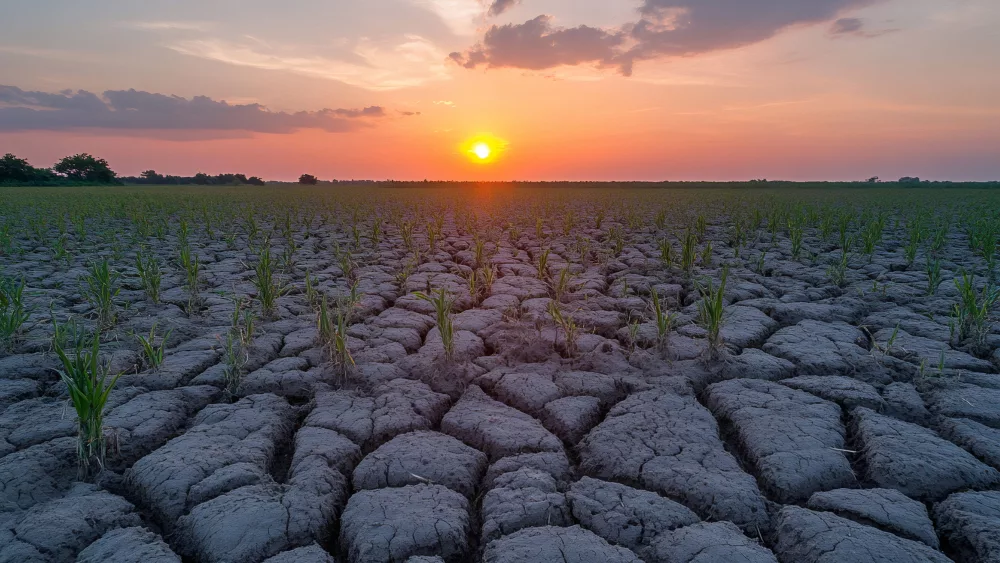

Governor Larry Rhoden has activated South Dakota’s Drought Task Force as dry conditions continue to impact portions of the state, particularly across agricultural regions.
In a statement released from Pierre, the governor announced the task force will convene for its first meeting Thursday, May 7, as officials step up efforts to track and respond to worsening drought conditions.
According to the latest U.S. Drought Monitor, moderate to extreme drought is currently affecting much of the southern third of South Dakota. Central areas of the state are experiencing abnormally dry conditions, while northern counties are still reporting conditions within a normal range.
“My administration is committed to protecting our farmers, ranchers, and communities across the state. While recent rainfall has provided some relief, drought is still impacting parts of South Dakota,” said Governor Larry Rhoden. “The Drought Task Force will help us closely monitor conditions and respond quickly if needed.”
The Drought Task Force serves as a coordination hub for state agencies and partner organizations, allowing them to share information and evaluate the broader impacts of drought. Those impacts include risks to agriculture, wildfire potential, and water supply concerns. By bringing together multiple entities, the task force aims to strengthen monitoring efforts, assess the severity of conditions, and identify available response resources.
Several state agencies are represented within the task force, including the Governor’s Office, the Department of Agriculture and Natural Resources, the Department of Public Safety, the Department of Game, Fish and Parks, the South Dakota National Guard, the Department of Social Services, the Department of Tourism, and the Department of Tribal Relations.
In addition to state agencies, the task force includes key federal and regional partners such as the USDA’s Farm Service Agency and Natural Resources Conservation Service, South Dakota State University Extension and School of Mines climatologists, the National Weather Service, and South Dakota Rural Water.
With dry conditions persisting, officials are also urging the public to take precautions, especially when it comes to open burning or any activity that could increase the risk of wildfires.
South Dakota’s drought monitor index remains available for ongoing public access as conditions continue to evolve.