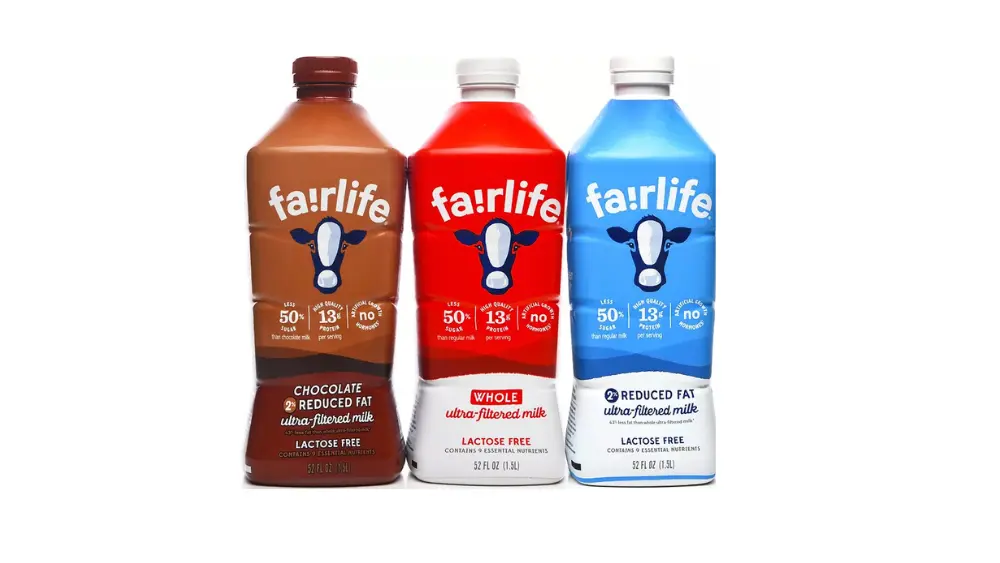
Despite manufacturing capacity constraints, The Coca-Cola Co. expects its Fairlife brand to continue adding volume growth this fiscal year. | Photo: ©STEVE CUKROV – STOCK.ADOBE.COM
ATLANTA — The Coca-Cola Co. may expand into different countries, categories and packaging sizes with its dairy protein products once more capacity comes online, said James Quincey, chief executive officer, on Dec. 2 at the Morgan Stanley Global Consumer and Retail Conference.
Nielsen data show that Coca-Cola, thanks to its Fairlife brand, already is the largest value-added dairy company in the United States, Quincey said.
“Under a different brand name, Santa Clara, we’re also the largest value-added dairy business in Mexico as well,” he said. “So I don’t think anyone would have bet on that being true 5 or 10 years ago.”
Coca-Cola needs increased capacity to come off an allocation system with retailers and to innovate more, Quincey said. The company took steps to increase capacity when it broke ground on a $650 million, 745,000-square-foot facility in Webster, NY, in April 2024. The facility is expected to come online in 2026.
“We can come off allocation, which is not a great place to be with retailers,” Quincey said. “No retailer loves that, and then once we’ve done that, we can then start looking at flavors, pack sizes and start getting into other categories where we know we have a superior product.”
He added, “We know there are other subcategories and categories we can get into with the Fairlife technology.”
Expanding Coca-Cola’s dairy protein products into other countries can be complex, he said.
“You’ve got to organize the whole agricultural system,” Quincey said. “The regulatory systems around the world, country by country on milk, are very different, quite complex, and we need to get into them and understand them.”
Quincey also spoke about plans for artificial intelligence (AI), including the FIFA World Cup 2026 in North America.
“There’s much more ability with AI to do more specifically targeted advertising and marketing even within a global run like Coke and a global program like FIFA,” Quincey said.
He said websites and apps now allow Coca-Cola customers such as retailers to order without being visited by a Coca-Cola salesperson.
“Then the AI starts sending suggested orders,” Quincey said. “Then the AI starts working out not just what that (retailer) is doing, but what all the people like them are doing and suggesting the order and going, ‘Well, successful retailers like you ordered X, Y, Z,’ and then you can start connecting it to the consumer system.”