Crown rot in corn has been around for decades, but increasing reports in recent years across the Midwest, Midsouth and eastern Corn Belt have brought it back into the spotlight.
Crown rot is a fungal infection of corn that occurs at the base of the stalk near the soil line, commonly attributed to the Fusarium genus. Areas with cold, wet compacted soil create a favorable environment for crown rot to develop, especially in stressed plants.
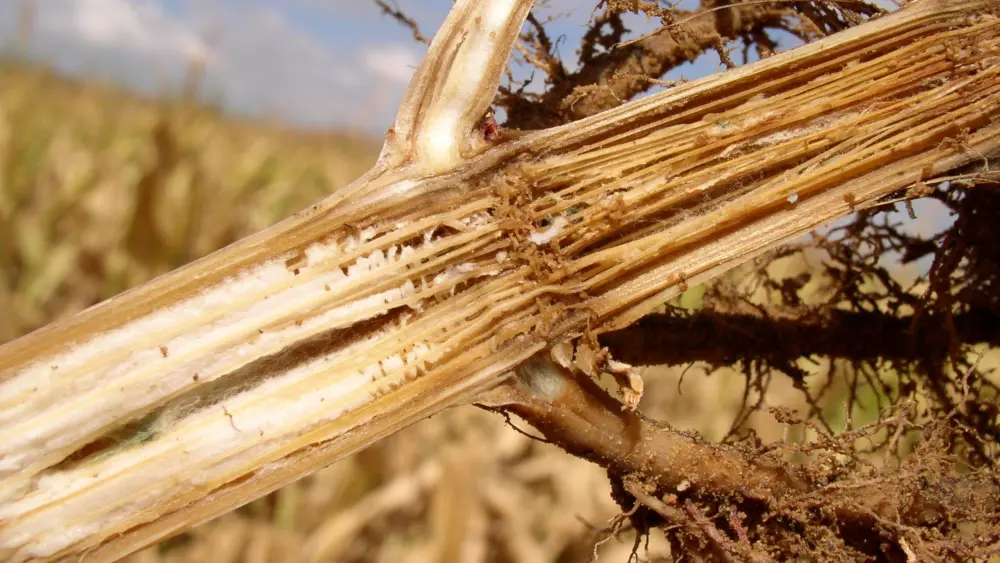
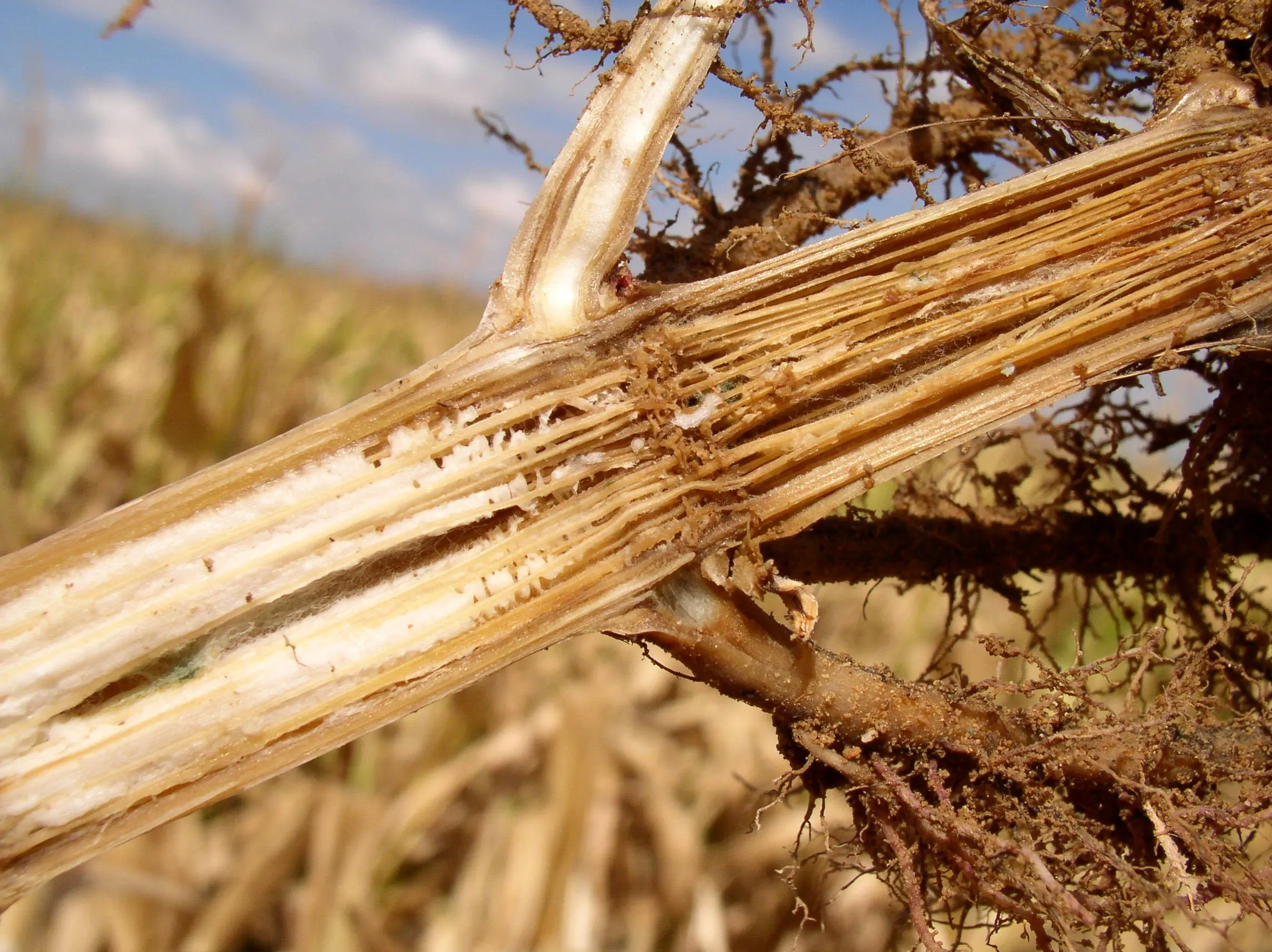
The best way to identify crown rot is to split the crown and lower stalk, looking for dark discoloration and rotting.
Other symptoms include stunted growth, wilting and discoloration of lower leaves. Visual symptoms often appear near maturity as “ghost plants,” individual plants that change color and senesce early while surrounded by healthy plants.
These symptoms often lead to lodging at the ground level, causing higher yield loss and complications when harvesting.
Much remains unknown about crown rot and research is ongoing to determine the causal organism(s), infection timing, favorable environmental conditions, and effective management practices.
Fungicide treatments have shown a mixed success rate when protecting against crown rot. Generally, practices that maintain the health of the plant such as reducing stress and insect feeding to the roots are the best way to combat the disease. No hybrids are currently scored for crown rot, but other trait scores such as stress tolerance, stalk strength and stay green can help combat the symptoms.
“Hybrids that have very good stay green and good stalk rot scores to begin with are something to consider in fields that have a history of stalk rot or crown rot,” said Matt Essick, Pioneer Agronomy Innovation Leader. “Conversations locally about which hybrids have better tolerance too is something that I think is important.”