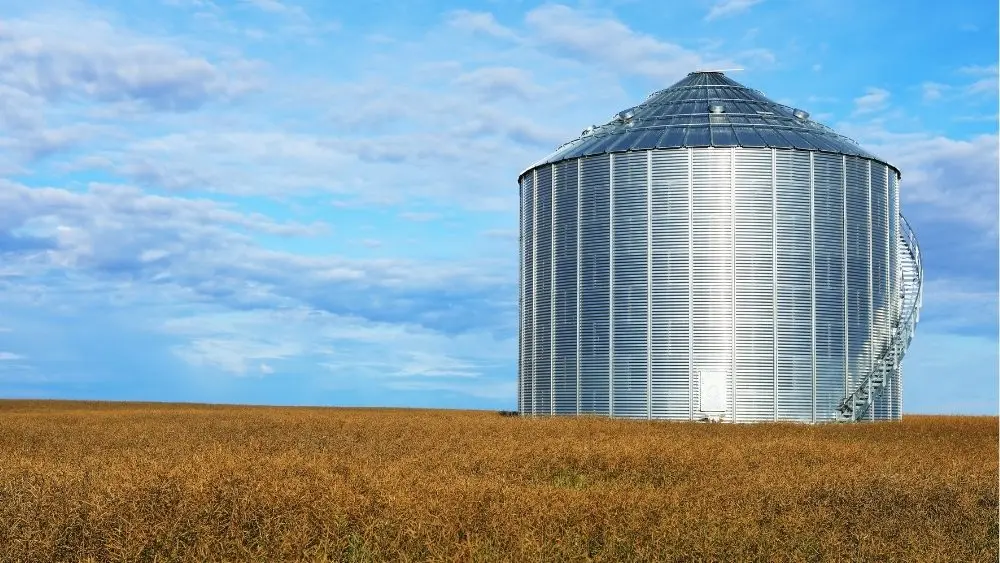
The buildout of grain storage capacity in the U.S. has stopped. That’s according to data from Joe Janzen, an economist for the University of Illinois.
He wrote on the Farmdoc Daily website that U.S. grain storage capacity grew in parallel with production from 2000 to 2019 at about 350 million bushels per year. However, that growth has stagnated since 2020 across all regions and facility types. Janzen said this stagnation, combined with continued production growth, has led to a record-high-capacity utilization rate, particularly in on-farm storage.
The 2025 crop brought these tensions to a head, with December 1 on-farm utilization reaching 80 percent. What’s less clear is why investment in grain storage capacity dropped. It’s also difficult to determine if current U.S. storage capacity is sufficient for efficient operation along the grain supply chains. Janzen said, “The entire grain industry will need to consider these questions as it addresses the shifting geography of global grain production.”
Janzen also added that the location and amount of grain storage capacity varies across regions, especially the share of grain storage capacity on farms. He said there is proportionally more on-farm storage capacity in the Western Corn Belt and Northern Great Plains, regions generally further from end-users with relatively weaker cash commodity prices.