Photo courtesy of Boehringer Ingelheim
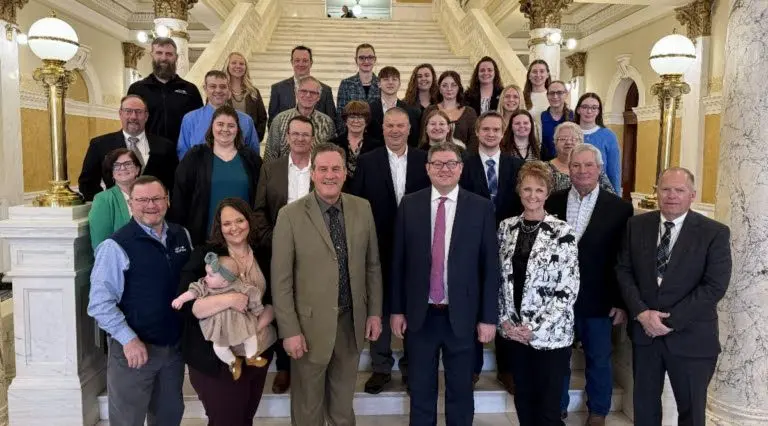
At this year’s Nebraska Dairy Convention and Trade Show in West Point, a pivotal moment unfolded for the future of dairy in the state. Surrounded by producers, industry partners, and community leaders, Nebraska Governor Jim Pillen signed LB 663 into law, marking a decisive move to position Nebraska as one of the most growth-ready dairy states in the nation.
For those outside of agriculture, zoning reform may not immediately sound transformative. But for dairy producers, especially those weighing expansion or relocation, certainty in the permitting process can mean the difference between breaking ground and backing away. Regulatory clarity is often as critical as feed supply or market access when making multimillion-dollar decisions.
LB 663 creates a uniform, transparent, and timely process for conditional use and special exemption permits at the county level. Introduced by Senator Tanya Storer after more than a year of collaboration between county officials and agricultural leaders, the legislation maintains local control while establishing consistent standards and clear timelines for applicants. That balance was a central focus throughout the bill’s development.
For producers, the implications are tangible.
It means Nebraska dairy families who have outgrown existing facilities can approach expansion plans with greater confidence. It means lenders and investors can evaluate projects within more predictable regulatory frameworks. It means multi-generational operations can look ahead with long-term strategy, knowing the permitting pathway is more defined than it has been in the past.
Just as significantly, the new law sends a signal beyond Nebraska’s borders.
Across the country, dairy operators are evaluating where their next investment will land. They are assessing states based on feed availability, water resources, workforce stability, processing capacity, and regulatory environments that support responsible livestock growth. Increasingly, regulatory certainty ranks high on that list.
Nebraska already offers strong feed production, central geography, and established processing infrastructure. With LB 663 now in place, the state has strengthened a key competitive advantage: permitting clarity.
Dairy expansion is not simply about increasing milk output. Each new or expanded operation generates construction activity, permanent jobs, and a stronger local tax base. It creates ripple effects for feed growers, nutritionists, veterinarians, truckers, equipment dealers, and rural service providers. It supports schools, healthcare facilities, and small-town businesses. In many cases, it represents a multi-generational commitment to a community.
For the Nebraska State Dairy Association, this moment represents both validation and opportunity.
Validation that state leadership views dairy as a strategic growth industry.
Opportunity for existing producers to scale responsibly and confidently.
And opportunity for dairy operations nationwide to view Nebraska as a state committed to partnership, progress, and production.
With LB 663 signed into law, Nebraska has made clear it intends to compete for the future of dairy. The message from West Point was unmistakable: Nebraska is open and ready for business.