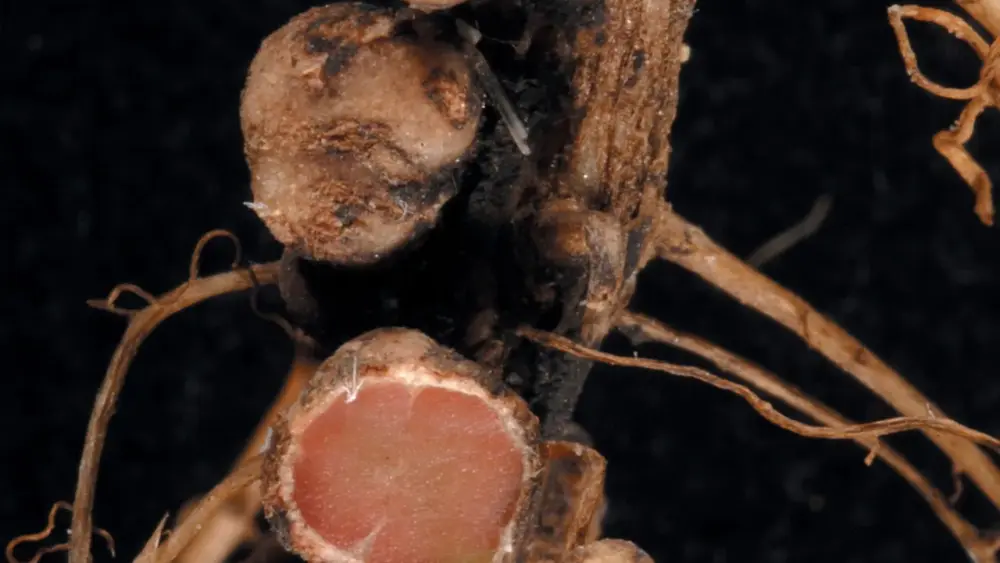
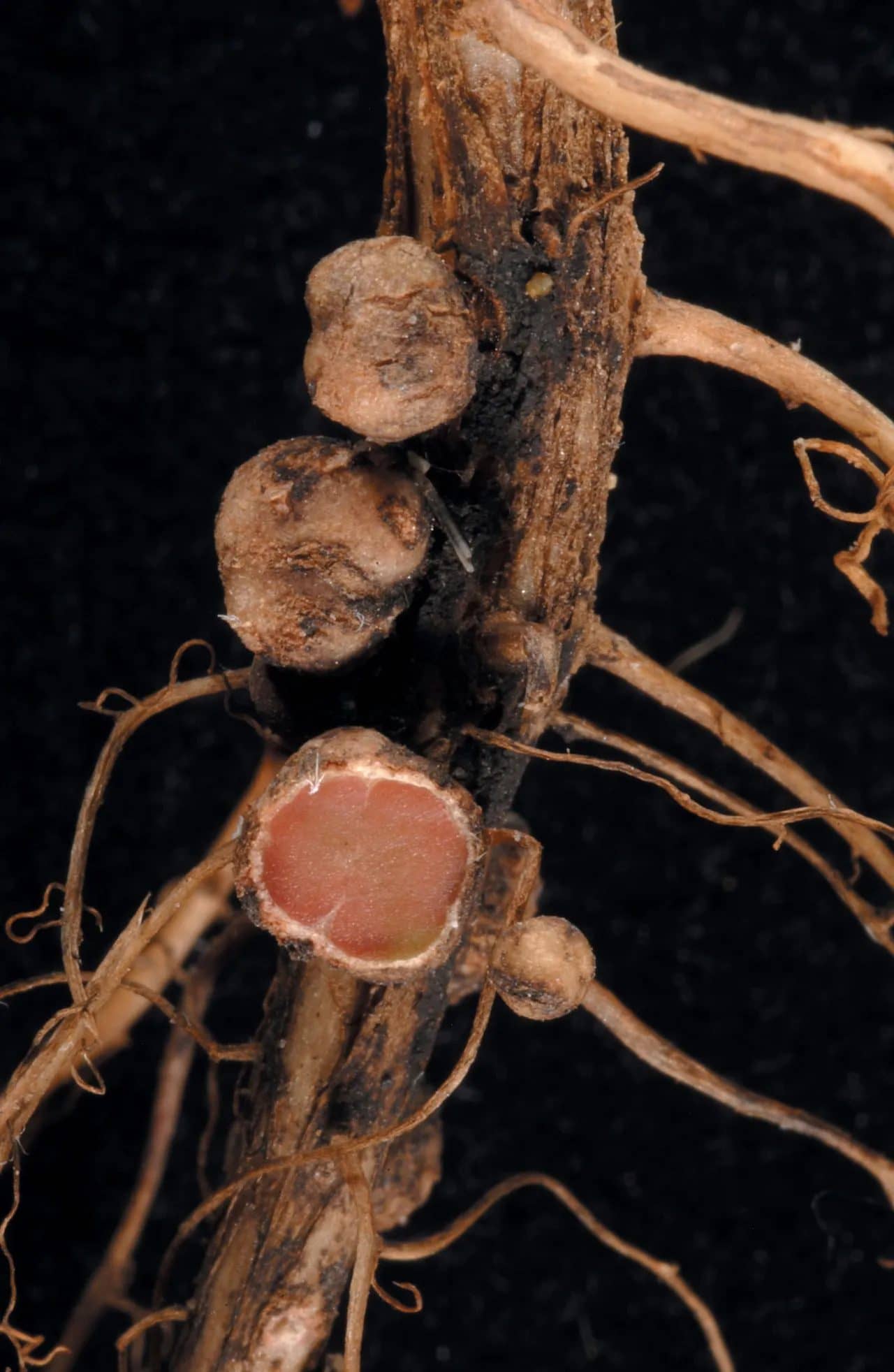
When cut open, soybean nodules should appear pinkish red if they are actively fixing nitrogen. (Photo credit: Iowa State University Publication PM1945)
WESTFIELD, Ind. (May 12, 2026) — As one of the first measurable indicators of crop performance, soybean nodulation serves as an early checkpoint. Robust nodulation is an early signal for strong yield potential.
“It’s your first early-season report card when you can determine if you’re doing things correctly in the field at planting or if changes to crop management plans are needed,” says TeeJay Hagen, Mustang Seeds field agronomist.
Importance of soybean nodulation
Nodulation describes the symbiotic relationship between soybeans and the bacteria Bradyrhizobium japonicum, which creates root nodules that supply 50% to 90% of the plant’s nitrogen needs. Soybeans require large amounts of nitrogen, especially during pod setting. Proper nodulation sets the crop up for the whole season.
“If nodulation is poor, you’re leaving a major nitrogen source on the table that synthetic fertilizers can’t replace,” says Hagen. “It’s hard to overcome that, and you’re setting yourself up for yield loss right away.”
Weather and soil compaction both impact nodulation. Too much or too little moisture can lead to poor nodulation.
A complete seed treatment package with an inoculant can help support nodulation, especially in cold, wet soil or in fields where soybeans weren’t planted in recent years. Populations of the Bradyrhizobium bacteria may be too low for strong nodulation in those fields. An inoculant puts that bacteria back in the soil, so the plant has the tools it needs to supply nitrogen for strong yield potential.
Grab a spade and scout
Nodules typically begin forming a week after emergence. Hagen recommends checking soybean nodulation about five weeks after emergence.
For the best results, dig (don’t pull) five to 10 plants from several different parts of the field, gently remove the dirt and cut open the nodules.
“You want to see eight to 20 nodules for healthy plants at V3 to V5, which is around that five-week post emergence period. The tap root should have five to seven nodules,” says Hagen. “If you used an inoculant, the nodules should start forming first on the main tap root and then out to the other roots.”
When cut open, healthy nodules should appear pinkish red inside. A white or green color can mean nodules haven’t begun to fix nitrogen, while brown, soft nodules are no longer fixing nitrogen or dead.
Growers can scout for other agronomic issues while they’re in the field. “See if your weed control program is meeting your needs, check your soil moisture and watch for compaction,” says Hagen.
Adjust your management plans
In-season options for responding to poor nodulation are limited. Supplemental nitrogen or a foliar product may help, but it’s not a common approach.
If nodulation is poor, it’s an early indicator to make changes for next season. That could mean addressing soil fertility or pH imbalances, revisiting seed treatments with inoculants, or correcting compaction or seed placement issues.
For help making those adjustments or planning for next year, reach out to your Mustang Seeds agronomist.